
A Quick Start Guide to Urinary Retention Solutions

Understanding Urinary Retention and Your Path to Relief
Urinary retention solutions range from catheterization and medications to surgery and lifestyle changes, depending on whether your condition is acute or chronic.
Quick Overview of Primary Solutions:
- Immediate Relief: Catheterization (urethral or suprapubic) to drain the bladder
- Medications: Alpha-blockers and 5-alpha reductase inhibitors for prostate-related issues
- Surgical Options: TURP, urethral dilation, UroLift, and HoLEP for lasting correction
- Self-Care: Pelvic floor exercises, bladder training, and timed voiding
- Advanced Therapy: Neuromodulation (sacral nerve stimulation) for nerve-related cases
Urinary retention is the inability to empty your bladder completely. It's a common condition, especially among older men; about 10% of men over 70 and up to 30% of men over 80 will experience it.
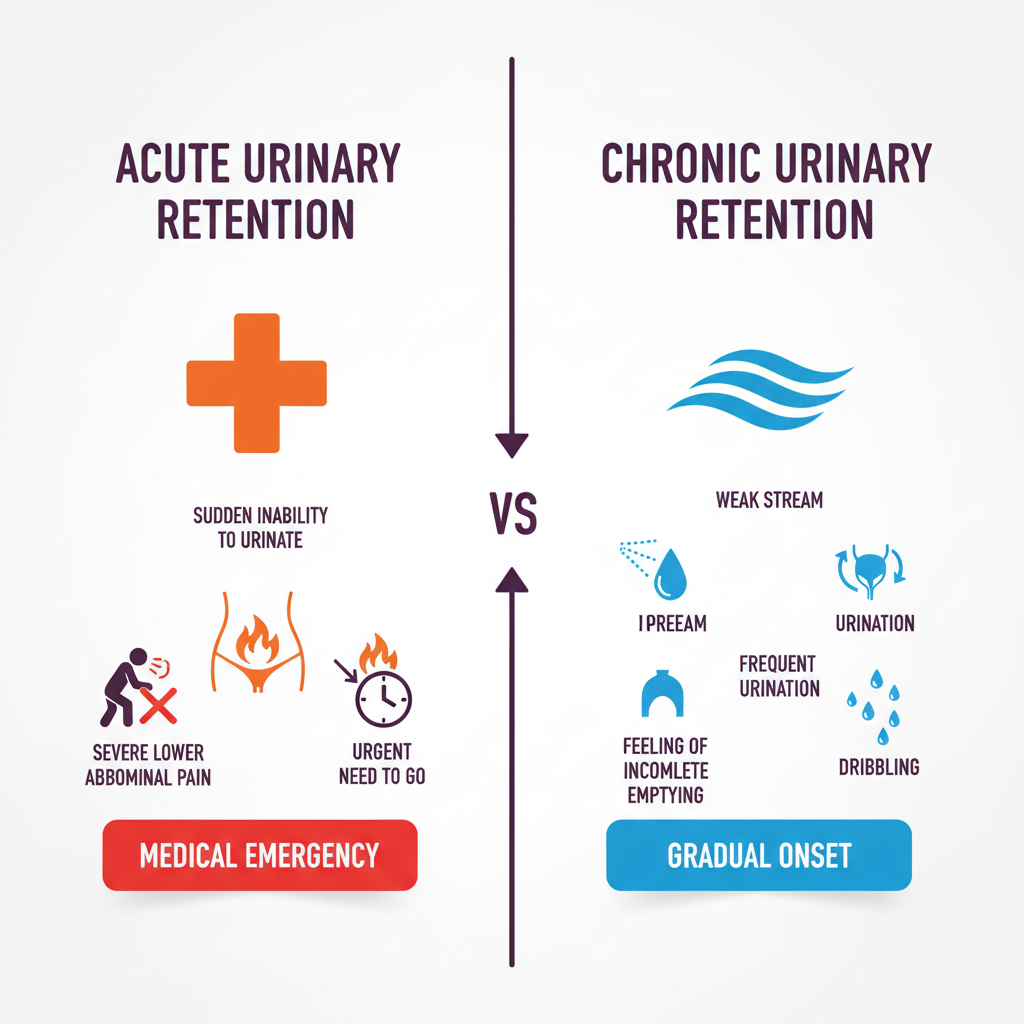
There are two main types. Acute urinary retention is a sudden, painful inability to urinate and is a medical emergency. Chronic urinary retention develops gradually, and you may not notice your bladder isn't fully emptying.
Causes vary, but for men, an enlarged prostate (BPH) is the most common culprit. Other causes include blockages, nerve damage from conditions like diabetes or stroke, medications, and surgical complications.
Fortunately, most cases are treatable. Healthcare professionals have many tools to help you regain bladder control, from immediate catheterization to medications and surgery.
Understanding the Causes and Diagnosis of Urinary Retention
When the complex system that controls urination is disrupted by a blockage, nerve damage, or medication, urinary retention solutions become necessary.
For men, an enlarged prostate (Benign Prostatic Hyperplasia or BPH) is the leading cause, accounting for 53% of cases. The growing prostate squeezes the urethra, obstructing urine flow. Other blockages include urethral strictures (narrowing of the urethra) and bladder stones.
Nerve damage can also disrupt bladder function. Conditions like Diabetes, stroke, Multiple Sclerosis, Parkinson's disease, and spinal cord injuries can interfere with the nerve signals that control urination. For example, bladder dysfunction is common among patients with diabetes, especially those with peripheral neuropathy.
Certain medications, such as antihistamines, opioids, and anesthesia, can temporarily affect your bladder's ability to empty. Post-surgical retention is also common, particularly after hip replacement or rectal surgery.
When to Seek Medical Attention
If you suddenly cannot urinate and have severe lower abdominal pain, you are experiencing acute urinary retention, a medical emergency that requires immediate care. For chronic symptoms—like a weak stream, frequent urination, or a feeling of incomplete emptying—schedule an appointment with your healthcare provider.
The Diagnosis Process
Your doctor will start with a physical exam and review your medical history. Key diagnostic tools include:
- Post-Void Residual (PVR) Test: A painless ultrasound or brief catheterization measures how much urine remains in your bladder after you urinate.
- Urodynamic Testing: These tests measure bladder pressure, urine flow rate, and capacity to assess how well your bladder and urethra work.
- Cystoscopy: A thin tube with a camera provides a direct look inside your bladder and urethra for blockages.
- Imaging Scans: Ultrasounds, CT scans, or MRIs can offer detailed pictures of your urinary tract.
Complications of Untreated Retention
Ignoring urinary retention can lead to serious health problems, including:
- Kidney damage from urine backing up into the kidneys
- Bladder damage from constant pressure
- Urinary Tract Infections (UTIs) from stagnant urine
- Bladder stones
- Overflow incontinence (leaking)
Early diagnosis and treatment are essential to avoid these complications.
Symptoms and Risk Factors to Watch For
Recognizing the signs of urinary retention is the first step toward getting the right urinary retention solutions.
- Acute Symptoms: A sudden, complete inability to urinate despite a painful, overwhelming urge. This is a medical emergency.
- Chronic Symptoms: A weak or stop-and-start urine stream, frequent urination (especially at night), dribbling, and a feeling of fullness even after urinating.
Key risk factors include older age, male gender, prostate problems like BPH, previous pelvic surgery, neurological conditions like diabetes or MS, and certain medications.
Comprehensive Urinary Retention Solutions: Medical and Catheter-Based Options
Once diagnosed, your treatment plan will focus on the underlying cause. For many, the first step is immediate relief by draining the bladder.
Bladder Drainage
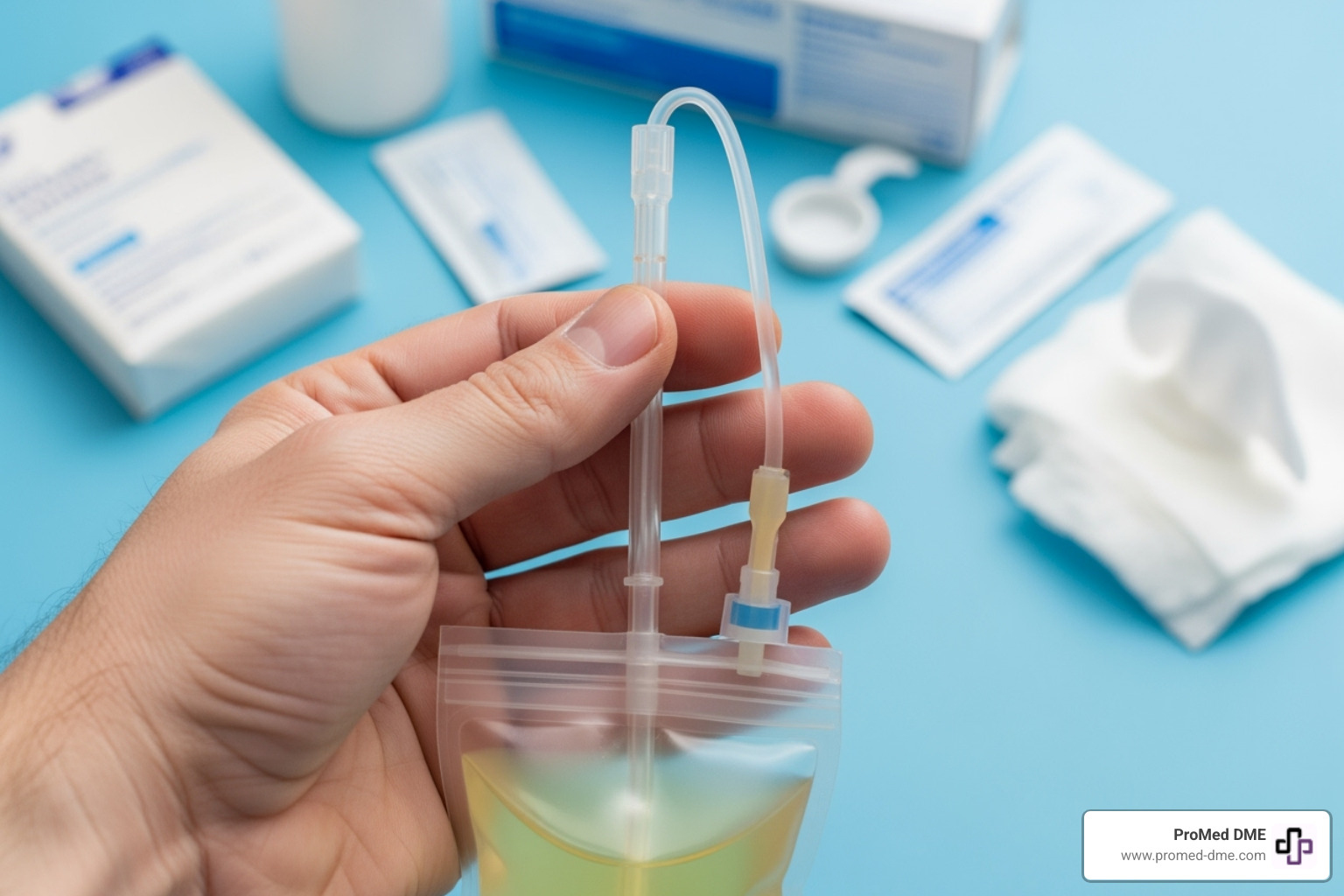
Catheterization is the primary treatment for emptying the bladder. A thin, flexible tube (catheter) is inserted to allow urine to flow out.
- Intermittent Self-Catheterization (ISC): For chronic retention, you learn to insert a catheter yourself several times a day to empty your bladder. This method can significantly reduce complications like UTIs and kidney problems. Hydrophilic-coated catheters are often recommended for their comfort and ease of use.
- Indwelling Catheters: These catheters remain in place for continuous drainage into a collection bag. They can be urethral (through the urethra) or suprapubic (through a small opening in the abdomen). For short-term use, silver alloy-impregnated urethral catheters may reduce infection risk, while suprapubic catheters often offer greater comfort.
At ProMed DME, we carry a comprehensive range of urology supplies, including various catheter types, with free shipping and support from our dedicated nurse.
Immediate Solutions for Acute Cases
Acute urinary retention is a medical emergency requiring emergency bladder decompression. A healthcare provider will typically perform a urethral catheter insertion for immediate relief. If the urethra is blocked, a Coude tip catheter with a curved end may be used to steer the obstruction. In some cases, a suprapubic catheter is placed directly into the bladder through the abdomen.
Importantly, modern research confirms that rapid and complete bladder decompression is safe and does not increase risks compared to gradual draining. If you suddenly can't urinate and are in pain, seek immediate medical care.
Medications for Management
Medications are crucial for managing chronic retention, especially when caused by an enlarged prostate (BPH).
| Feature | Alpha-Blockers | 5-alpha Reductase Inhibitors |
|---|---|---|
| Mechanism of Action | Relax muscles in bladder neck and prostate | Shrink the prostate gland |
| Onset of Action | Relatively quick (days to weeks) | Slower (several months) |
| Primary Goal | Improve urine flow and relieve symptoms | Reduce prostate size, improve flow, prevent retention |
| Examples | Tamsulosin, Alfuzosin, Doxazosin | Finasteride, Dutasteride |
| Prevention of AUR | May help improve voiding trial success | Can prevent acute urinary retention in the long-term |
- Alpha-blockers (tamsulosin, alfuzosin, etc.) relax muscles to improve urine flow quickly.
- 5-alpha reductase inhibitors (finasteride, dutasteride) shrink the prostate over several months, addressing the root problem.
- Antibiotics are used if an infection like a UTI or prostatitis is causing the retention.
Your doctor may also prescribe combination therapy (e.g., an alpha-blocker and a 5-alpha reductase inhibitor) for better results. Always use these medications under a doctor's supervision.
Advanced and Surgical Treatment Pathways
When less invasive treatments aren't enough, or if there's a significant physical blockage, surgery may be recommended to provide a more permanent solution.

When Surgery Is Considered
Surgery is typically an option when medications fail, retention causes complications like kidney damage, or a physical blockage needs removal. Common procedures include:
- Transurethral Resection of the Prostate (TURP): A surgeon removes excess prostate tissue that is blocking the urethra.
- Urethral Dilation: This procedure stretches and widens a narrowed urethra (stricture).
- Cystocele Repair: For women, this surgery repositions a prolapsed (sagging) bladder to restore normal function.
- Urinary Diversion: In rare cases of severe bladder damage, this surgery creates a new path for urine to exit the body.
Neuromodulation (Sacral Nerve Stimulation)
For retention caused by nerve problems, neuromodulation acts like a "pacemaker for your bladder." A small device sends gentle electrical pulses to the sacral nerves, which control bladder function. This helps restore proper brain-bladder communication. The therapy is reversible and can be turned off or removed if needed. However, it is not effective for retention caused by physical blockages like an enlarged prostate.
Exploring Surgical Procedures for Lasting Relief
Modern, minimally invasive surgeries offer significant relief with faster recovery times.
- Prostatic Urethral Lift (UroLift): Small implants lift and hold enlarged prostate tissue away from the urethra, creating a clear channel for urine.
- Transurethral Water Vapor Therapy (Rezum): This procedure uses targeted steam to shrink excess prostate tissue over time.
- Holmium Laser Enucleation of the Prostate (HoLEP): A laser removes the enlarged portion of the prostate, offering excellent results for larger glands with often shorter hospital stays than TURP.
- Urethroplasty: This surgical reconstruction of the urethra offers a long-term solution for severe or recurring strictures.
Other surgeries may be needed to remove tumors or repair issues like a herniated disc that affect bladder nerves. Your healthcare team will help you choose the best option for your specific condition.
Lifestyle Adjustments and Self-Care Strategies
Alongside medical treatments, daily habits and self-care can significantly improve bladder function. These urinary retention solutions can be powerful tools in your daily toolkit.

Physical Therapy and Bladder Training
- Pelvic Floor Exercises (Kegels): Strengthening these muscles helps support your bladder and urethra. A physical therapist specializing in pelvic health can teach you the proper technique, sometimes using biofeedback for guidance.
- Bladder Training: This involves re-educating your bladder. With timed voiding, you urinate on a fixed schedule, gradually extending the time between visits. Double voiding—trying to urinate again a few moments after you finish—helps ensure the bladder is as empty as possible.
Lifestyle Changes for Bladder Health
Simple changes can have a big impact:
- Fluid Management: Stay hydrated (about 6-8 cups of fluid daily unless a doctor says otherwise), but consider limiting liquids a few hours before bed.
- Diet Modification: Eat a high-fiber diet to avoid constipation, which can put pressure on the bladder. Also, be mindful of bladder irritants like caffeine, alcohol, artificial sweeteners, and spicy foods.
- Proper Urination Posture: For women, sitting fully on the toilet (not hovering) helps relax the pelvic floor for more complete emptying.
- Healthy Habits: Maintaining a healthy weight and quitting smoking support overall bladder health.
Natural Remedies
Some natural remedies have been explored for bladder health, but always talk to your doctor before trying them. Peppermint oil vapor has been studied for encouraging urination, particularly in postpartum women. Dandelion and stinging nettle root have been traditionally used for urinary symptoms, but scientific evidence is still developing.
Non-surgical Long-Term Management
For chronic retention, behavioral strategies are key. Keeping a bladder diary to track your habits and symptoms can help your doctor tailor your treatment. Scheduled bathroom visits and relaxation techniques (like deep breathing) during urination can also help retrain your bladder and reduce difficulty. A pelvic floor specialist can provide the most comprehensive guidance for long-term improvement.
ProMed DME is here to support your management plan with the urology supplies you need, delivered with free shipping and guidance from our nurse.
Frequently Asked Questions about Urinary Retention
Navigating urinary retention solutions can bring up many questions. Here are answers to some common concerns.
Can urinary retention resolve on its own?
Acute urinary retention (a sudden, painful inability to urinate) is a medical emergency and will not resolve on its own. It requires immediate medical attention to drain the bladder and prevent complications.
Chronic urinary retention rarely disappears without treating the underlying cause, such as an enlarged prostate or nerve damage. However, temporary retention caused by anesthesia or certain medications may resolve once the drug wears off.
How much urine left in the bladder is considered retention?
This is measured with a Post-Void Residual (PVR) test. While the exact number can vary, a PVR volume of 100-200 mL or more is generally considered significant urinary retention. Your doctor will interpret this number based on your symptoms and overall health to determine the right course of action.
Is it safe to drain a full bladder all at once?
Yes, modern medical practice supports rapid and complete bladder decompression for acute urinary retention. Previous concerns about this causing complications like bleeding or low blood pressure have been disproven by research. Rapid draining provides immediate pain relief and is considered the standard of care.
Your Path to Relief and Long-Term Management
Understanding the available urinary retention solutions is the first step toward relief. While the journey may seem daunting, a proper diagnosis and a consistent treatment plan can lead to significant improvement and a return to your normal life.
The most important step is to consult your healthcare provider. They can identify the cause of your retention and create a personalized treatment plan, which may include medications, catheterization, physical therapy, or surgery. The long-term outlook is generally positive with prompt and consistent care.
For those managing urinary retention at home, reliable access to medical supplies is essential for comfort and independence. At ProMed DME, we simplify this process. We offer a full range of quality urology products, including various catheters and accessories, to meet your specific needs.
Our commitment to you includes:
- Free shipping on all orders.
- A dedicated nurse on staff to answer your questions and provide support.
- Assistance with most insurance plans to help minimize your out-of-pocket costs.
We work directly with your insurance company to make the process as seamless as possible. You are not alone in this. With the right medical care and quality supplies, you can manage urinary retention successfully. When you need reliable medical supplies delivered to your door, we are here to help.
Related Resources & Articles
Stay informed with our informative blog posts.


Discover the ProMed Advantage
& Try Our Products
We offer free shipping and legendary customer service to ensure you receive the
best DME products for your needs.