
Size Matters: Choosing the Correct Catheter for an Enlarged Prostate
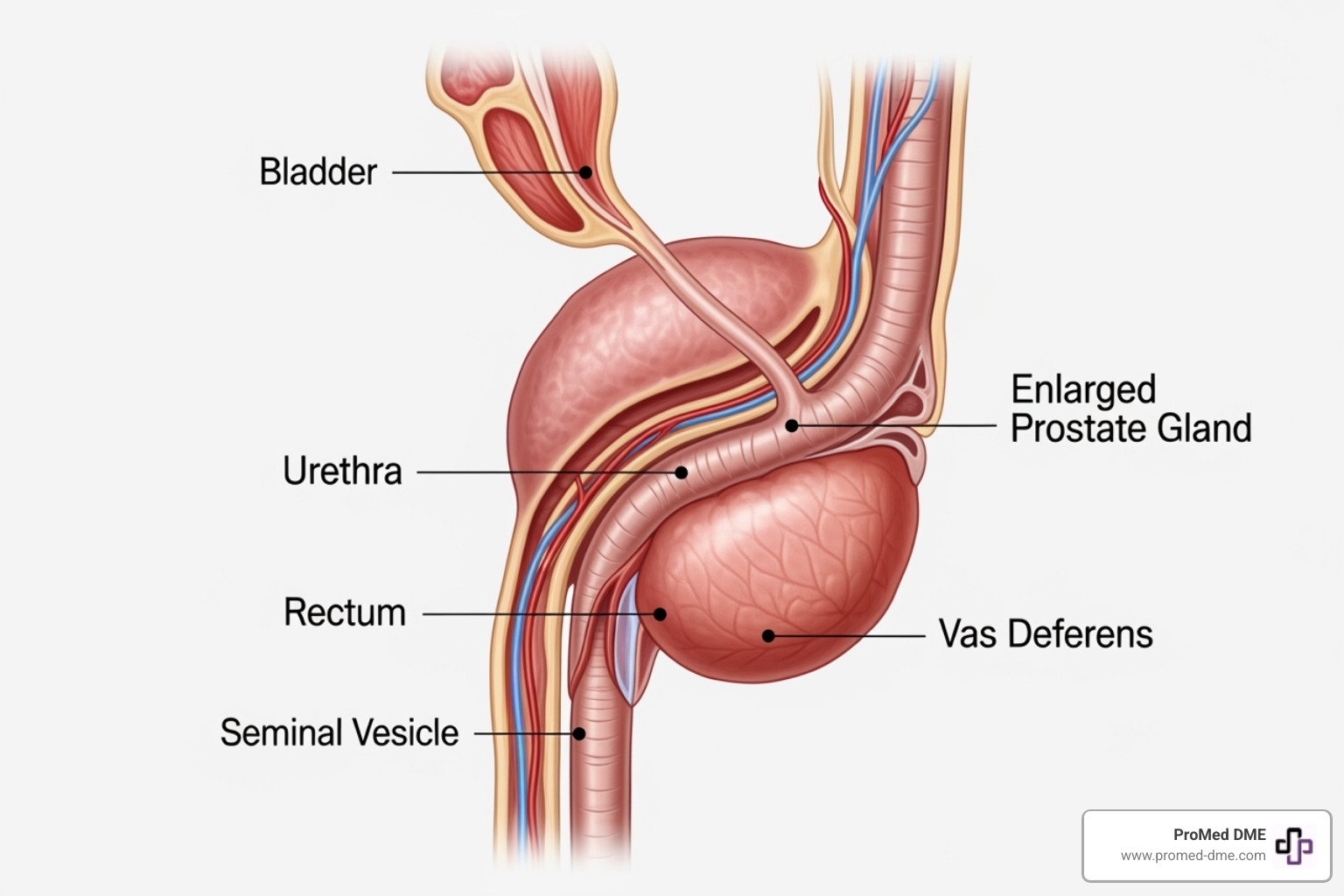
Why an Enlarged Prostate Makes Catheterization a Challenge
Catheter size for enlarged prostate typically ranges from 18 to 24 French (Fr) for men with benign prostatic hyperplasia (BPH). A larger size prevents the catheter from kinking as it passes the narrowed prostatic urethra. A Coudé-tipped catheter (curved tip) is usually recommended over a straight tip because it more easily steers the upward angle created by the enlarged prostate.
Quick Reference for Catheter Selection:
- Recommended Size: 18-24 Fr (larger than the standard 14-16 Fr)
- Preferred Tip: Coudé (curved) rather than straight
- Balloon Size: 5 mL or 10 mL (avoid 30 mL for routine use)
- Material: Silicone or hydrogel-coated for longer-term use
An enlarged prostate, a condition affecting nearly 50% of men in their eighth decade, creates unique urinary challenges. The gland obstructs the lower urinary tract and changes the urethra's anatomy, creating an acute angle at the bladder neck that makes standard catheter insertion difficult. This can lead to failed attempts, urethral trauma, and the formation of false passages.
Research shows that using an 18-Fr Coudé catheter resolves 41% to 54% of difficult catheterizations, highlighting how critical proper selection is for men with BPH. Repeated failed attempts cause pain, stress, and urethral injury that may require surgery. Understanding the right catheter size and type isn't just about comfort—it's about preventing serious complications.
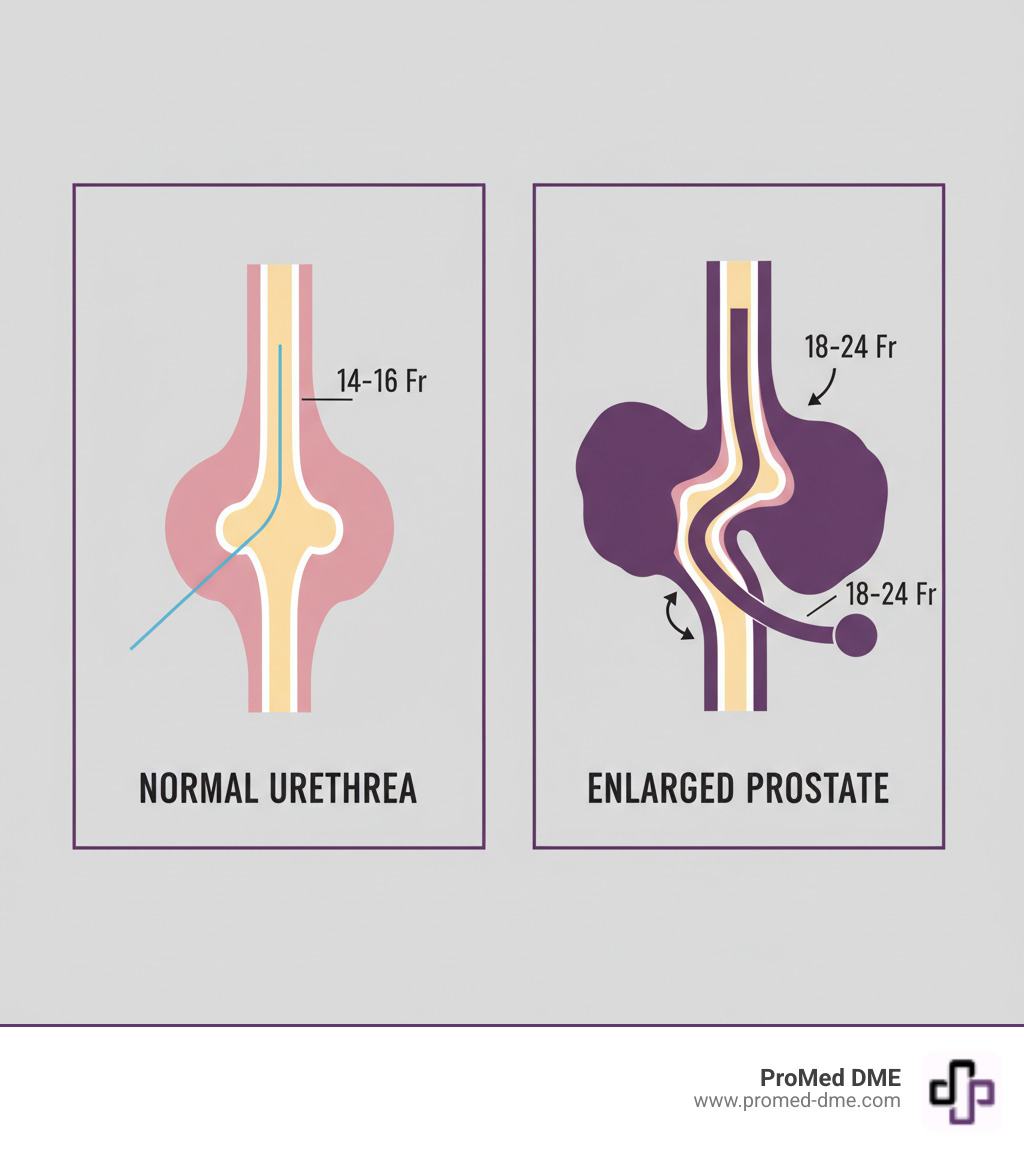
Common catheter size for enlarged prostate vocab:
The Best Catheter Types and Features for BPH
Anatomical changes from Benign Prostatic Hyperplasia (BPH) require specific catheter designs for safe and effective insertion. As the prostate grows, it squeezes the urethra and creates an upward bend, making it difficult for a standard straight-tipped catheter to pass. Specialized designs are crucial, as the right tip shape, material, and firmness are needed. The catheter must be rigid enough to pass the obstruction without kinking, yet flexible enough to prevent urethral trauma.
Catheter materials play an important role. Silicone catheters are biocompatible for long-term use, while hydrogel-coated catheters become slippery when wet for smoother insertion. The right material and catheter firmness help prevent kinking when passing through the angled prostatic urethra.
For a more detailed look at managing complex catheterization situations, this review on Current Trends in the Management of Difficult Urinary Catheterizations offers valuable clinical insights.
The Role of a Coudé-Tipped Catheter
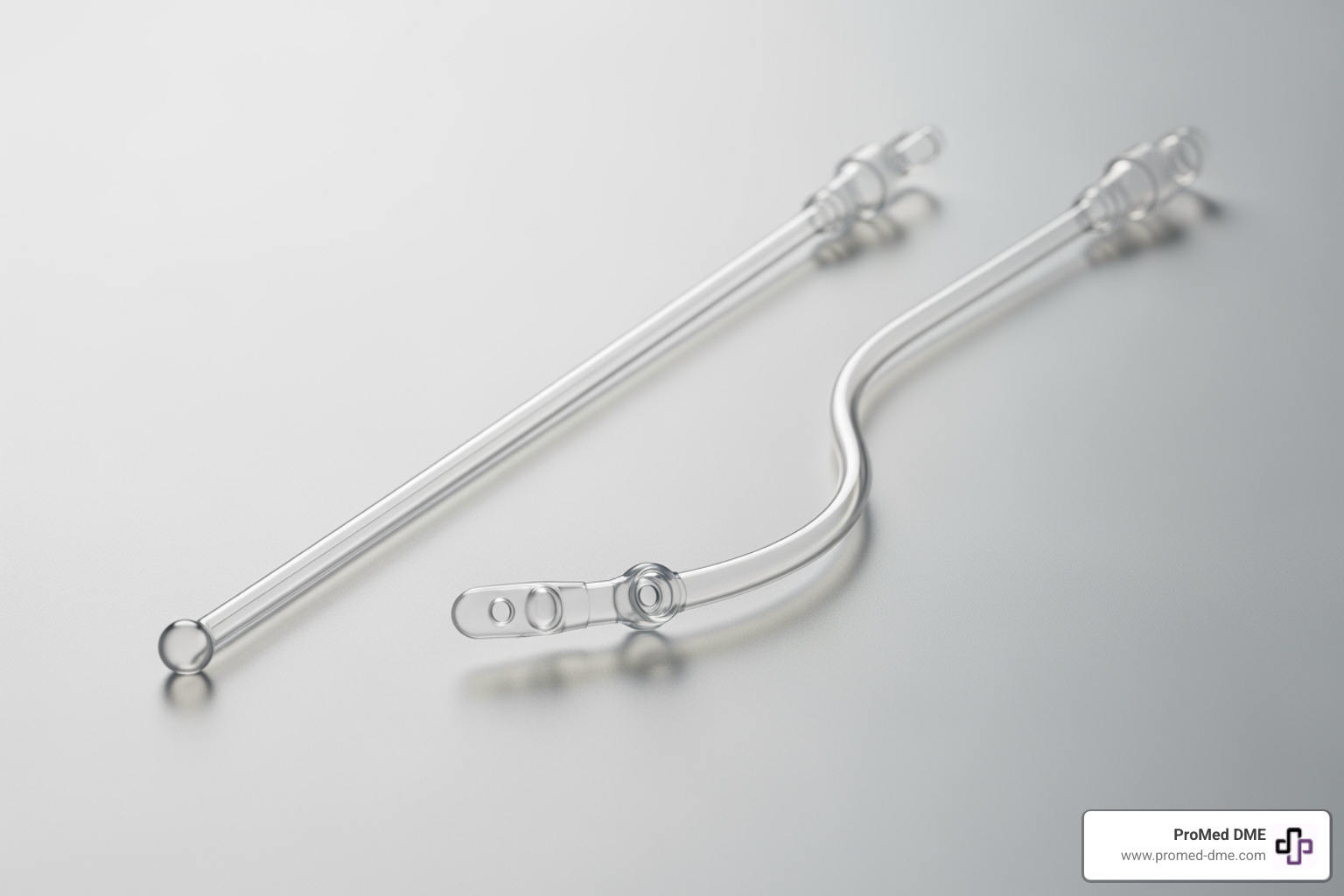
The Coudé-tipped catheter (or Tiemann catheter) is the go-to choice for men with enlarged prostates. Its slight upward curve is designed to follow the male urethra's natural curve, especially when an enlarged prostate creates an upward bend at the bladder neck.
A straight catheter can hit the obstruction like a wall, causing pain and potentially creating a false passage (a tear in the urethral wall). The Coudé's angled tip glides along the top of the urethra, steering around the obstruction. This curved tip design is effective for navigating the prostatic urethra with BPH, urethral strictures, or bladder neck elevation, significantly reducing trauma during insertion.
Providers often use a Coudé when standard attempts fail. As mentioned, switching to an 18-Fr Coudé catheter resolved up to 54% of difficult catheterizations. The Coudé tip is designed to bypass obstructions safely and with minimal discomfort.
Intermittent vs. Indwelling Catheters for BPH
The two main approaches are intermittent and indwelling catheterization, and the choice depends on your needs and lifestyle.
Intermittent catheters are used for short-term drainage and removed after the bladder is empty. Men with chronic urinary retention or acute urinary retention (AUR) often self-catheterize several times a day. The main advantage is a lower risk of infection. While it requires dexterity, it offers more freedom. The NSWOCC Adult Intermittent Urinary Catheter Decision Aid can help you decide if this is right for you.
Indwelling catheters, also known as Foley catheters, remain in the bladder, held by a balloon. They are used for long-term management after surgery or for severe retention when intermittent use isn't feasible. However, indwelling catheters carry a higher risk of catheter-associated urinary tract infections (CAUTI). For this reason, providers prefer intermittent catheterization when possible to reduce infection risk.
Your doctor will consider your patient lifestyle, ability to self-catheterize, and retention severity. At ProMed DME, our on-staff nurse can answer questions about either method and help you get the right supplies for whichever method your healthcare provider recommends.
What is the Recommended Catheter Size for Enlarged Prostate?
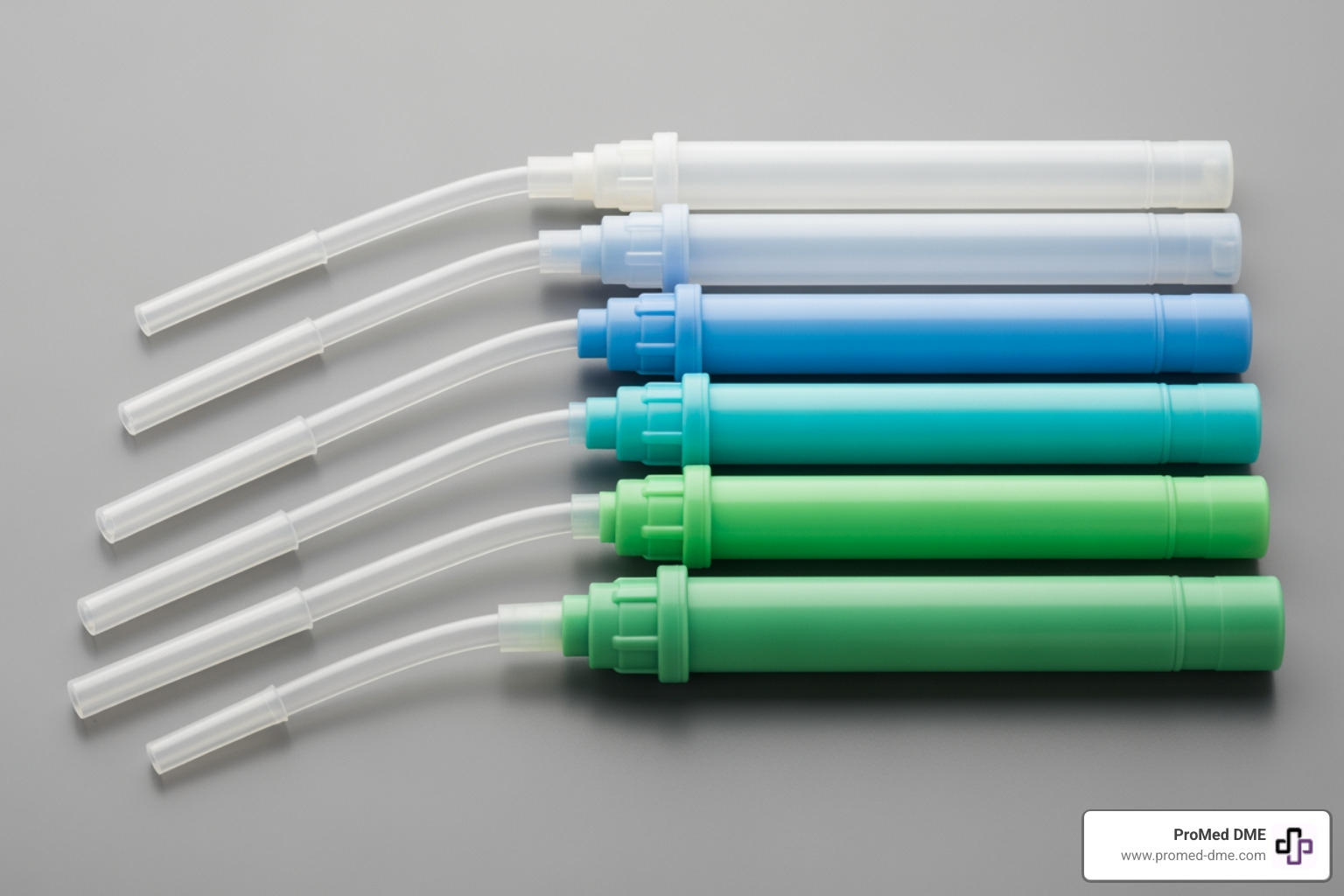
Catheters are measured using the French (Fr) scale, where a higher number means a thicker catheter (1 Fr = 0.33 mm diameter). Standard sizes for men are 14 Fr to 18 Fr. However, an enlarged prostate changes the anatomy, so these sizes are often inadequate.
The guiding principle is to use the smallest effective size to minimize trauma. With BPH, this is counterintuitive, as a slightly larger catheter is often better.
Why a Larger French Size is Often the Best Catheter Size for Enlarged Prostate
For an enlarged prostate, providers often recommend a Coudé-tipped catheter of 18 French or larger, sometimes up to the 20 to 24 Fr range. This may seem backward, but a larger, more rigid catheter steers a narrowed prostatic urethra better. A smaller, flexible catheter is more likely to buckle or kink, leading to difficult insertion and potential injury.
The increased rigidity of a larger catheter helps it maintain its shape and push through the narrowed passage. This is especially important for a Coudé tip, which needs firmness to steer effectively. A larger diameter also provides more efficient drainage, which is important if sediment or mucus is present. A properly sized larger catheter often leads to smoother insertion and better outcomes.
The goal is safe, effective drainage on the first try. For more sizing information, the Foley Catheter Size Guide & Chart - BackTable Podcast is a useful resource.
Choosing the Right Balloon Size: A Key Part of Catheter Size for Enlarged Prostate
The balloon at the catheter's tip is as important as the tube's diameter for safety and comfort. Inflated with sterile water after insertion, the balloon anchors an indwelling catheter. Standard sizes are 5 mL or 10 mL, typically inflated with 10 mL of sterile water, which work well without causing irritation.
While 30 mL or larger balloons exist, they are not recommended for routine use in men with BPH. A large balloon can cause painful bladder spasms and prevent complete emptying, leading to urine leakage ("bypassing") and a higher infection risk.
Perhaps most concerning is the risk of bladder neck erosion from constant pressure, which can damage tissue and lead to long-term complications like strictures. Larger balloons are sometimes used short-term after surgery to control bleeding, but not for long-term BPH management.
For long-term health, stick with a standard 5 mL or 10 mL balloon. Your provider will ensure it's inflated correctly for secure placement without the complications of oversized balloons.
Preventing Complications: Insertion Techniques and Proper Care
Choosing the right catheter size for enlarged prostate and a Coudé tip is only the first step. Proper insertion and care are critical, as catheterization with BPH is a skilled procedure requiring professional guidance.
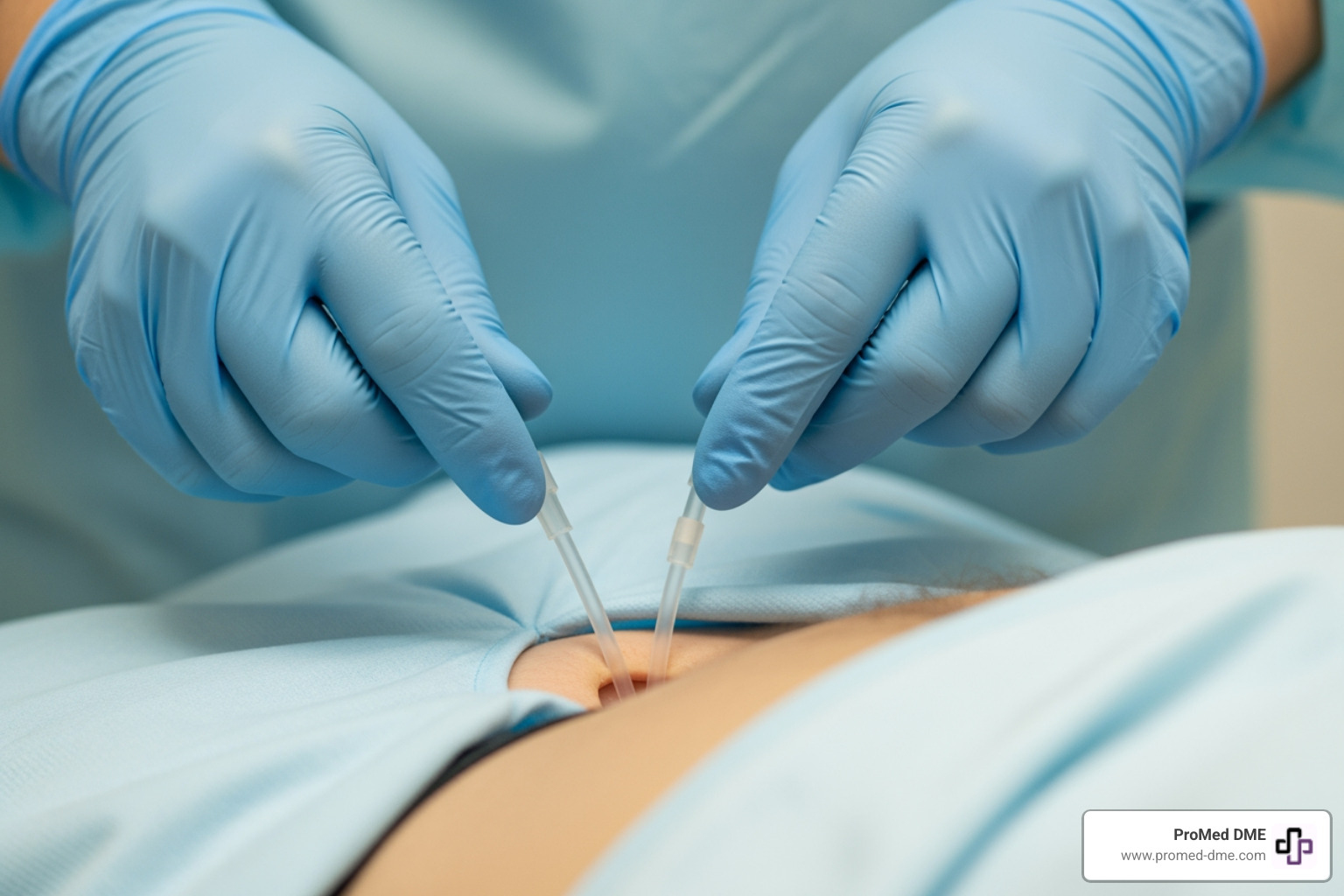
Insertion and training should always be done by a healthcare professional. Key techniques include:
- Aseptic technique: Use sterile gloves, equipment, and thorough hand hygiene to prevent catheter-associated urinary tract infections (CAUTIs).
- Ample lubrication: Use 10-15 mL of lubricant-anesthetic gel injected into the urethra, waiting 3-5 minutes before insertion to reduce pain and prevent trauma.
- Proper positioning: Hold the penis elongated at a 60-degree angle to help straighten the urethra for easier insertion.
- Gentle insertion: Never force a catheter. If you meet resistance, pause and ask the patient to take a deep breath to relax the muscles. Persistent resistance means you should stop to avoid injury.
- Correct placement: Insert the catheter to the Y-hub to ensure the balloon is fully in the bladder before inflation. For uncircumcised men, always reduce the foreskin afterward to prevent paraphimosis.
For those managing a catheter at home, the Nova Scotia Health resource on Care of Your Urinary Catheter at Home offers practical guidance.
Signs of an Incorrect Catheter Size or Type
Recognizing the warning signs of an incorrect catheter size for enlarged prostate can prevent serious complications. Contact your healthcare provider immediately if you notice:
- Pain during balloon inflation: Stop immediately. This likely means the balloon is in the urethra, which can cause severe damage.
- Poor or no urine return: This suggests a blockage, kink, or improper placement.
- Urine bypassing the catheter: Leaking can indicate a blockage, bladder irritation, or a catheter that is too small.
- Frequent blockages: Sediment may mean the catheter is too small.
- Urethral trauma or bleeding (hematuria): Pain with bleeding points to injury from an improper size, type, or technique.
An ill-fitting catheter also increases CAUTI risk by causing irritation.
Home Care and Preventing Infections
Up to 69% of CAUTIs are preventable with proper infection control. Key home care practices include:
- Maintaining a closed drainage system: Avoid unnecessary disconnections, which create an entry point for bacteria.
- Securing the catheter: Secure the catheter to your upper thigh or lower abdomen to prevent tension on the urethra.
- Daily hygiene: Clean the insertion site daily with soap and water. If uncircumcised, retract, clean, and reposition the foreskin.
- Regular bag changes: Change collection bags per manufacturer instructions. Reusable bags should be replaced every 30 days.
- Staying hydrated: This helps flush the urinary system. For more tips, see Keeping Your Urinary Tract Healthy.
- Monitoring for infection: Watch for signs like fever, chills, cloudy urine, or pain, and report them to your provider promptly.
Frequently Asked Questions about Catheters for BPH
Here are answers to common questions about catheters for an enlarged prostate.
Can using a catheter that is too large cause damage?
Yes. While men with BPH often need a larger catheter size for enlarged prostate (18 to 24 Fr), "larger" does not mean "as large as possible." An excessively large catheter can cause harm. The goal is to find the smallest size that works effectively without buckling. Complications from a catheter that is too large include:
- Urethral erosion and stricture formation: Excess pressure on the urethral lining can create scar tissue, narrowing the urethra.
- Bladder neck irritation: This can lead to pain and bladder spasms.
- Blocked periurethral glands: Compression of these glands can lead to irritation and infection.
- Increased pain and discomfort: Both during and after insertion.
Providers choose the smallest catheter that ensures adequate drainage—a calculated decision, not a "bigger is better" approach.
What is the difference between a straight tip and a Coudé tip catheter?
A straight tip catheter has a standard, straight end and works well when there are no obstructions.
A Coudé tip catheter has a slight upward curve at its tip. This design is engineered to steer obstructions like an enlarged prostate. The curve helps steer the catheter through the upward bend in the prostatic urethra, reducing resistance and the risk of trauma. For men with BPH, a Coudé tip often means a smoother, safer insertion.
How do I know if my catheter size is wrong?
Your body will signal if the catheter size is wrong. Recognizing these signs early can prevent complications:
- Urine leaking around the catheter: "Bypassing" can mean the catheter is too small, blocked, or causing bladder spasms.
- Persistent pain or significant discomfort: This suggests an incorrect size, placement, or irritation from the balloon.
- Frequent kinking or buckling: During insertion, this indicates the catheter may be too small or that a Coudé tip is needed.
- Slow or stopped urine drainage: This can mean the catheter is too small, kinked, or blocked.
If you experience these issues, contact your healthcare provider. They can assess the problem and ensure you have the correct catheter. The nurse on staff at ProMed DME is also available to answer questions.
Conclusion: Partnering with Your Provider for the Right Fit
Choosing the correct catheter size for enlarged prostate is key to protecting your urinary health and quality of life. We've covered the essentials: the Coudé-tipped catheter is often crucial for navigating the urethral curve caused by BPH. A larger French size (18-24 Fr) provides the rigidity to prevent buckling, while a standard 5 mL or 10 mL balloon avoids bladder irritation.
Proper insertion technique and diligent home care are just as important for preventing complications and staying healthy. Most importantly, partner with your healthcare provider. Open communication ensures you find the right fit for your unique anatomy and needs.
At ProMed DME, we make getting the right urology supplies simple. Our dedicated nurse on staff is available to answer your questions, walk you through product options, and help you understand what your healthcare provider has recommended. We work with most insurance plans to minimize your out-of-pocket costs, and we offer free shipping across the United States from our home base in Stuart, Florida.
Whether you're just starting with catheterization or you've been managing it for years, we're here to support you with top-quality products and the kind of personal attention that makes a real difference. Your comfort, dignity, and health matter to us.
Ready to find the right supplies for your needs? Find your urology supplies and let us help you get what you need.
Related Resources & Articles
Stay informed with our informative blog posts.


Discover the ProMed Advantage
& Try Our Products
We offer free shipping and legendary customer service to ensure you receive the
best DME products for your needs.