
Sizing Up Your Catheter: Everything You Need to Know
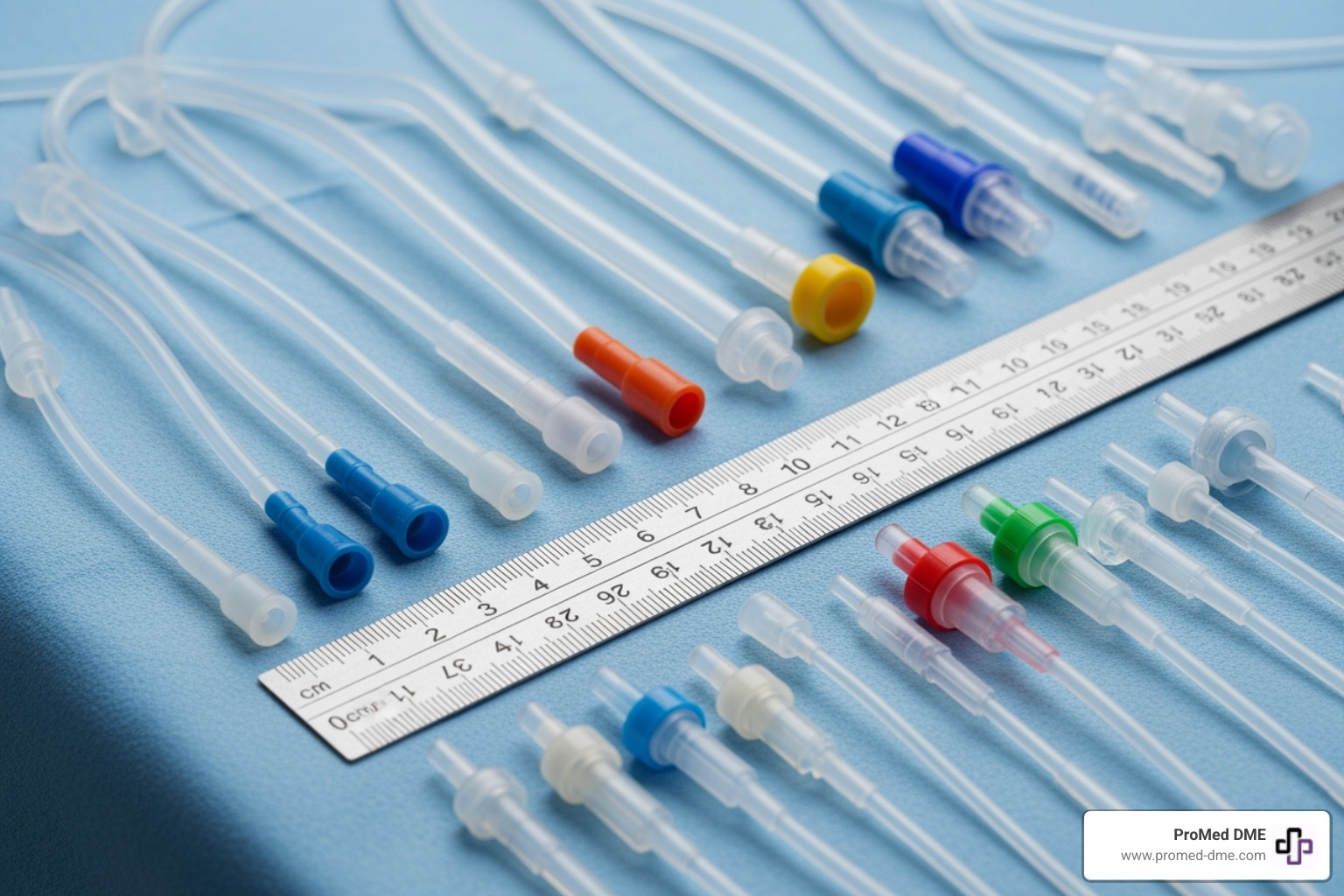
Why Proper Catheter Sizing Matters
A catheter sizing guide is essential for anyone who needs urinary catheters, as choosing the wrong size can lead to serious complications like pain, leakage, or infections. The right catheter size ensures comfort, proper drainage, and reduces your risk of urinary tract infections.
Quick Catheter Sizing Reference:
| User Type | Recommended French Size | Length |
|---|---|---|
| Adult Males | 14-16 Fr | 16 inches |
| Adult Females | 10-12 Fr | 6-8 inches |
| Children | 6-10 Fr | 10-12 inches |
Key Sizing Facts:
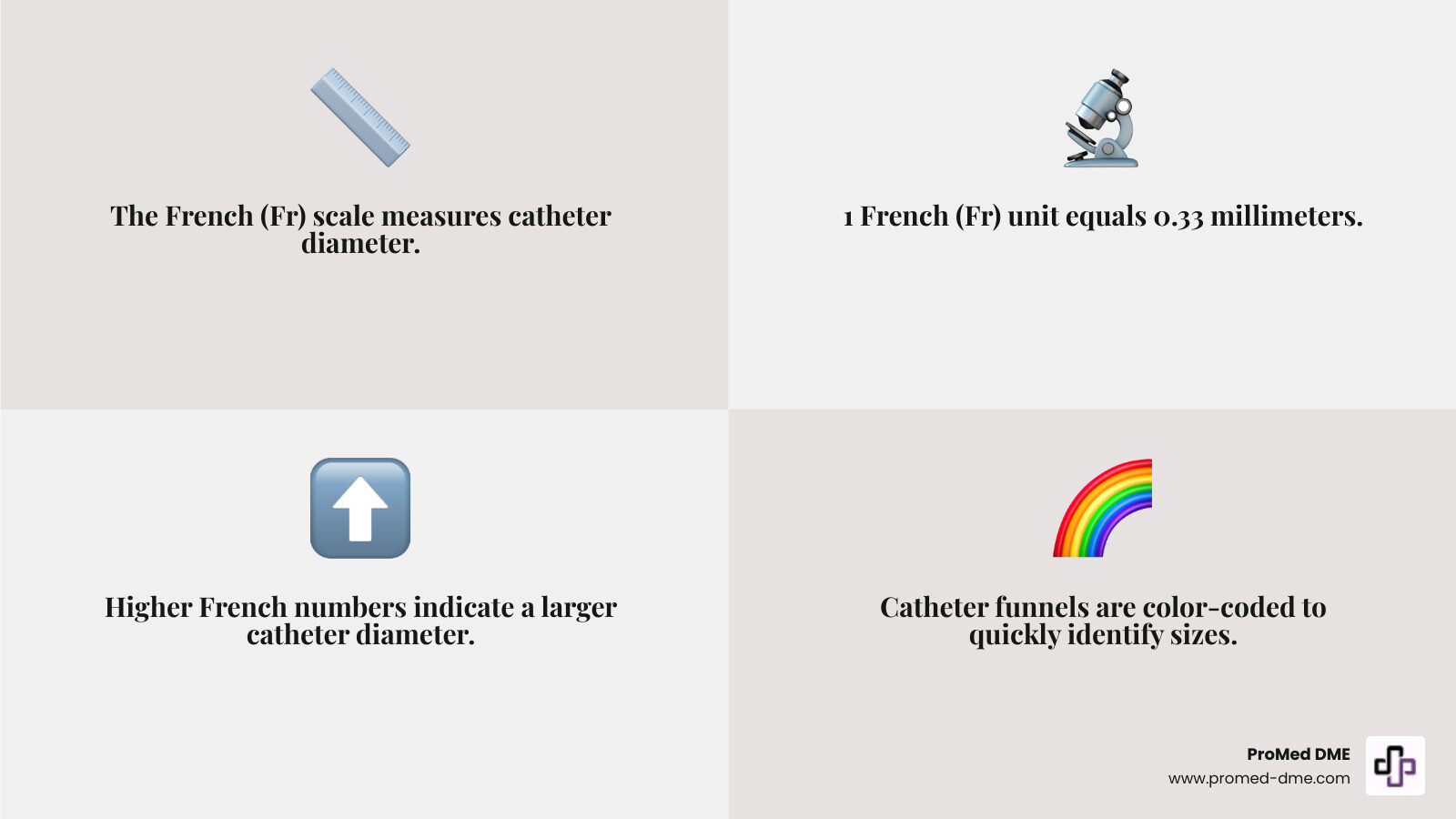
- French (Fr) scale measures catheter diameter
- 1 Fr = 0.33 millimeters
- Higher numbers = larger diameter
- Color-coded funnels help identify sizes
There's no "one size fits all" with catheters. Your anatomy, medical condition, and the type of urine you're draining all affect which size works best for you.
The three main catheter types each have different sizing needs:
- Indwelling (Foley) catheters - Stay in your bladder for days or weeks
- Intermittent catheters - Used several times daily for self-catheterization
- External (condom) catheters - Worn outside the body like a sheath
Using the wrong size can cause urethral trauma, painful insertion, leakage, or slow drainage. That's why healthcare professionals use specific guidelines to match your catheter to your body and medical needs.
Related content about catheter sizing guide:
Understanding Different Catheter Types
Not all catheters are created equal, and understanding the differences between them is crucial for your catheter sizing guide journey. Each type serves a specific purpose and comes with its own sizing considerations. Think of it like choosing the right tool for the job – you wouldn't use a hammer to fix a watch, right?
Let's walk through the three main types of urinary catheters and what makes each one special.
Indwelling (Foley) Catheters
Foley catheters are the workhorses of the catheter world. These flexible tubes stay put in your bladder for extended periods – anywhere from a few days to several weeks. They're designed for people who can't empty their bladder naturally due to urinary retention, after surgery, or various medical conditions.
What makes Foley catheters unique is their clever design. They have a small balloon at the tip that gets inflated with sterile water once it's inside your bladder. This balloon acts like an anchor, keeping the catheter securely in place so it won't slip out unexpectedly.
Most Foley catheters are 2-way catheters, meaning they have two channels running through them. One channel drains urine, while the other inflates and deflates that handy retention balloon. But sometimes, you need more firepower.
3-way catheters include a third channel for continuous bladder irrigation. This extra channel allows healthcare providers to flush sterile solution through your bladder continuously. It's particularly useful after certain surgeries or when dealing with blood clots that might block normal drainage. Because of this additional channel, 3-way catheters are typically larger, ranging from 16 Fr to 24 Fr.
The balloon sizes matter too, though they're separate from the French sizing. Common options include 5ml balloons for general use and 30ml balloons for special situations like post-prostate surgery, where the larger balloon helps apply pressure to control bleeding.
For some patients, a suprapubic catheter might be the better choice. Instead of going through the urethra, these catheters are inserted through a small incision in your abdomen directly into the bladder. While it sounds more invasive, it can actually be more comfortable and carry lower infection risks for long-term use.
Intermittent Catheters
Intermittent catheters are the "in and out" option. Unlike Foley catheters that stay put, these are inserted to drain your bladder and then immediately removed. It's called self-catheterization, and many people do this several times a day to manage their bladder health.
This approach is perfect for people with conditions requiring intermittent catheterization like neurogenic bladder, which can result from spinal cord injuries, multiple sclerosis, or diabetes. It gives you more control over your schedule and reduces the risk of infections compared to indwelling catheters.
Single-use catheters are the gold standard here. Each catheter is sterile and meant to be thrown away after one use. While it might seem wasteful, reusing these catheters significantly increases your infection risk – even after washing with antibacterial soap, bacteria can still lurk on the surface.
Modern intermittent catheters have some pretty impressive features that make life easier. No-touch catheters come with protective sleeves that let you insert the catheter without touching the tube itself. This dramatically reduces the chance of introducing bacteria from your hands.
Pre-lubricated catheters eliminate the hassle of separate lubricant packets. The lubrication is already applied, making insertion smoother and reducing contamination risks. Hydrophilic catheters take this a step further – they have a special coating that becomes incredibly slippery when activated by water, creating a more comfortable experience with less friction.
External (Condom) Catheters
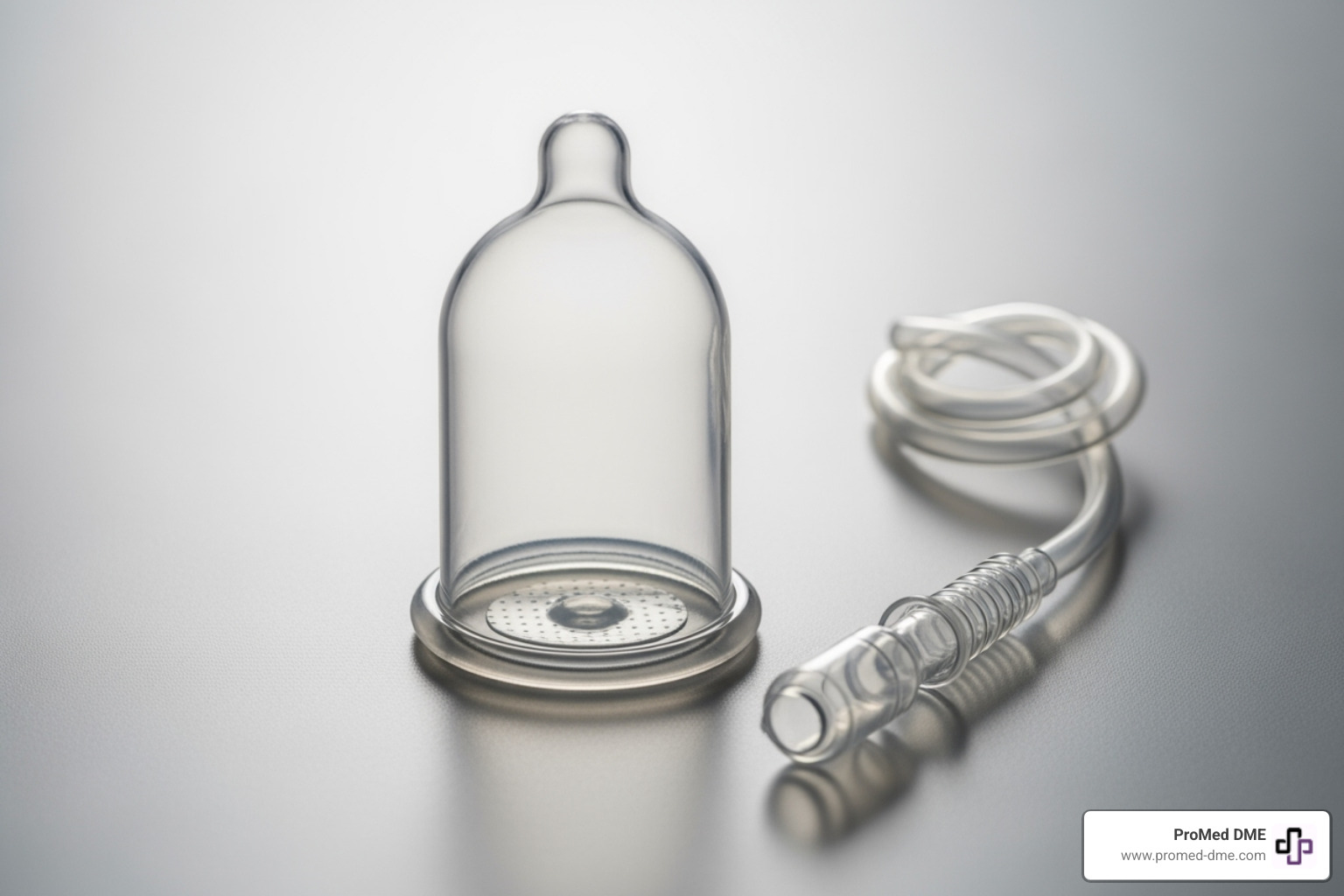
External catheters are the gentle giants of urinary management. Also called condom catheters, these non-invasive devices fit over the penis like a condom-like sheath, collecting urine without entering your body at all.
They're particularly helpful for managing urinary incontinence in men who experience leakage but don't need internal catheterization. Since there's no insertion involved, the infection risk is much lower than with internal catheters.
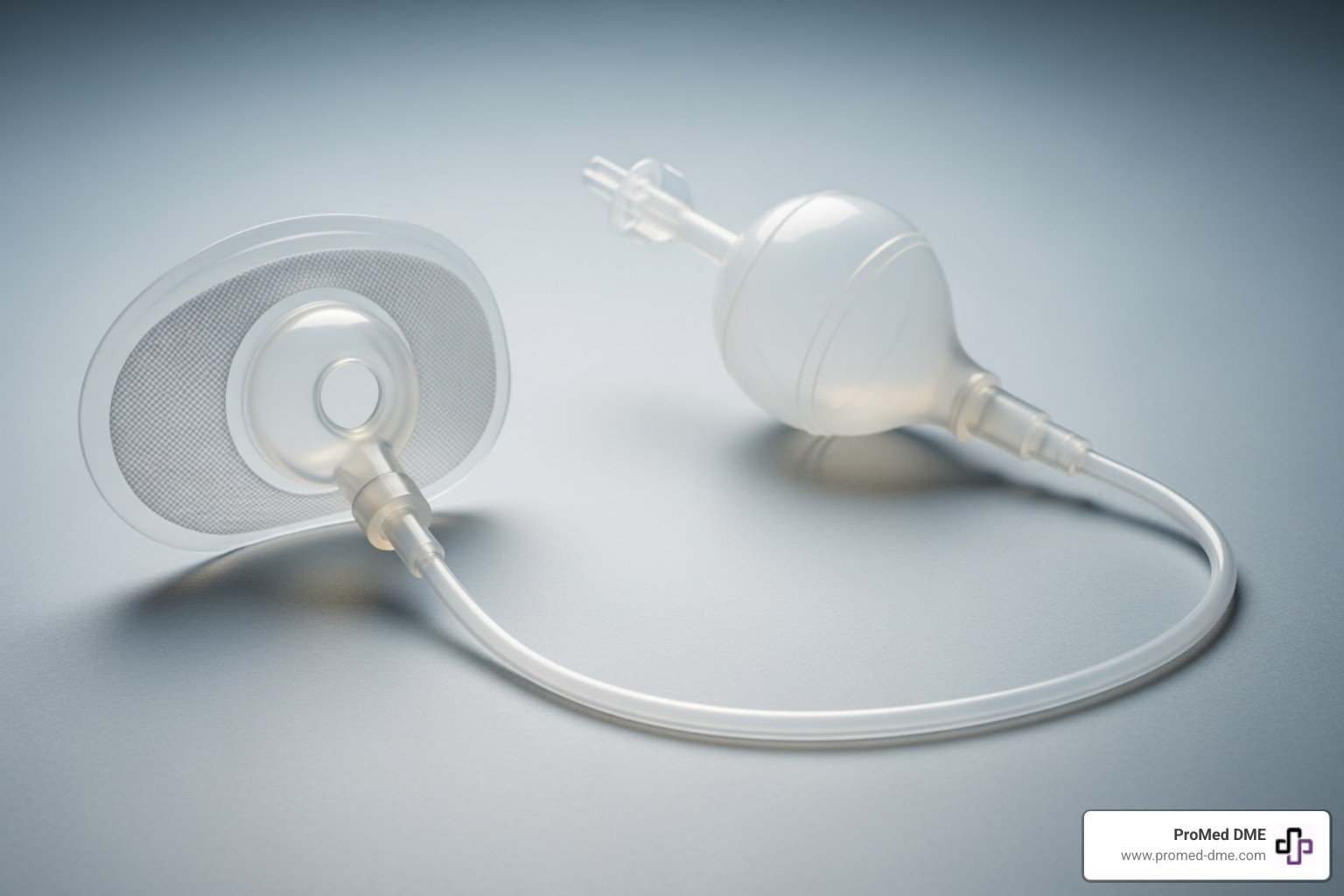
Here's where sizing gets interesting – external catheters are sized differently than internal ones. Instead of using the French scale, they're sized in millimeters based on the circumference of your penis. To find your size, you measure around the head of your penis and divide that number by 3.14 (pi) to get the diameter.
Adhesive plays a crucial role in making external catheters work properly. Most come with adhesive already applied or include separate adhesive strips. Getting the right fit with proper adhesion prevents leaks and keeps your skin comfortable throughout the day.
The beauty of external catheters is their simplicity and comfort – they let you manage incontinence discreetly while going about your normal activities.
The Ultimate Catheter Sizing Guide: The French Scale Explained
Now that we've explored the different types of catheters, let's dive into the universal language of catheter sizing: the French scale. Think of this as your roadmap to understanding how catheter measurements work. Whether you're new to catheters or just want to better understand what those numbers and colors mean, this catheter sizing guide will help everything make sense.
What is the French Scale (Fr)?
The French scale is like a universal measuring stick for catheters. You might also see it written as Charrière (Ch) - that's just the fancy French name for the same thing. This system tells us exactly how wide a catheter is, and the best part? Every manufacturer uses the same scale, so a 14 Fr catheter from one company is the same diameter as a 14 Fr from another.
Here's the simple math behind it: 1 French (Fr) equals 0.33 millimeters. So if you have a 12 Fr catheter, you can multiply 12 by 0.33 to get about 4 millimeters in diameter. Don't worry though - you won't need to do this math yourself. The important thing is understanding what the numbers mean.
The key rule to remember is that larger numbers equal larger diameter. A 16 Fr catheter is definitely wider than a 14 Fr catheter. It's that straightforward. This universal gauge system makes it easy for healthcare professionals and patients to communicate clearly about catheter sizes, no matter where you are or which brand you're using.
Catheter Diameter vs. Catheter Length
While the French size tells you how wide your catheter is, the length is just as important for comfort and proper function. Think of it this way: you need the right width for your body, but you also need the right length to reach where it needs to go.
Pediatric length catheters are designed specifically for children and typically measure around 10 inches long. The smallest ones, for infants, might be as tiny as 5 or 6 Fr, while older kids and teens usually need 8 to 12 Fr sizes.
Female length catheters are much shorter because the female urethra is only about 1.5 to 2 inches long. These catheters typically range from 6 to 8 inches, and some are even shorter at just 3.5 inches for maximum discretion. Most adult women use 10 to 12 Fr sizes, though some may need up to 16 Fr depending on their specific needs.
Male and unisex length catheters are the longest at about 16 inches because they need to travel through the much longer male urethra, which averages around 8 inches. Adult men typically use 14 to 16 Fr sizes, though the range can go from 12 Fr up to 24 Fr based on individual anatomy and medical conditions.
The difference in urethra length between men, women, and children is why these distinct catheter lengths exist. Using the wrong length can mean the catheter doesn't reach your bladder properly, or it might be unnecessarily long and awkward to handle.
How to Read a Catheter Sizing Guide Chart
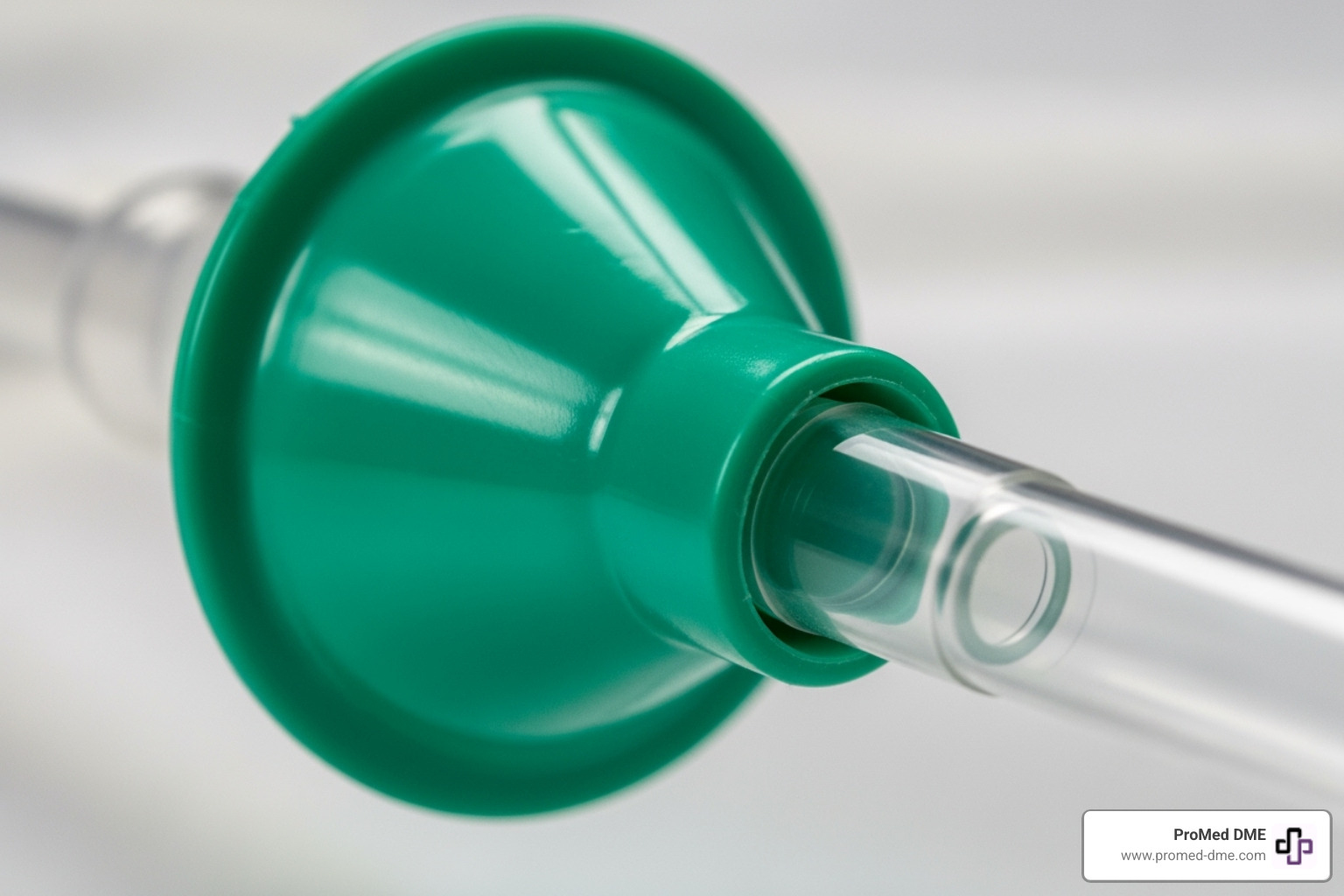
Here's where catheter design gets really smart. Manufacturers use a universal color-coding system on the funnel end of catheters, so you can identify the size at a glance. Even if you can't read the packaging or the numbers have worn off, that colored funnel tells you exactly what French size you're holding.
The most common colors you'll see are black for 10 Fr, white for 12 Fr, green for 14 Fr, orange for 16 Fr, and red for 18 Fr. These five sizes cover the majority of adult catheter needs. You might also encounter yellow for the smaller 6 Fr, light blue for 8 Fr, dark blue for 20 Fr, purple for 22 Fr, and light green for 24 Fr sizes.
This color system is incredibly helpful when you're managing catheter supplies or need to quickly identify the right size. However, it's always wise to double-check the French size that's printed on the catheter packaging, especially if you're ever unsure about the color coding.
Understanding this catheter sizing guide puts you in control of your catheter care and helps you communicate more effectively with your healthcare team about your needs and preferences.
Choosing the Right Catheter Size
Finding the perfect catheter size is like finding the right pair of shoes - it needs to fit just right to be comfortable and work properly. Too big, and you'll have problems. Too small, and it won't do its job. That's why choosing the right size is so important for your comfort and health.

Recommended Catheter Sizes by User
When it comes to catheter sizing guide recommendations, healthcare professionals start with general guidelines based on typical anatomy. Think of these as starting points that get adjusted based on your specific needs.
Adult males typically use catheters between 14 Fr and 16 Fr. Most men find that a 14 Fr catheter works well for their daily needs. However, depending on individual circumstances, some men might use anything from 12 Fr up to 24 Fr - that's quite a range!
Adult females usually do well with 10 Fr to 12 Fr catheters, with 12 Fr being the most common choice. The general range for women can go up to 16 Fr, but healthcare providers prefer to use the smallest size that works effectively. This approach prioritizes comfort while ensuring proper drainage.
Pediatric patients need much smaller catheters because of their delicate anatomy. Children typically use 6 Fr to 10 Fr catheters. Infants start with the tiniest sizes - usually 5 Fr or 6 Fr. As children grow into adolescence, they might move up to 8 Fr to 12 Fr, gradually transitioning toward adult sizes as their bodies develop.
These are just starting points. Your healthcare provider will consider many other factors to find your perfect fit.
Your Personal Catheter Sizing Guide: Key Factors
Every person is unique, and several important factors influence which catheter size will work best for you. Understanding these factors helps you have better conversations with your healthcare team.
Patient anatomy plays a huge role in sizing decisions. Some people naturally have narrower urethras, while others might have conditions that affect the size they need. Men with enlarged prostates might need different sizing considerations, and anyone with urethral strictures (narrowing) might require smaller French sizes or specially curved catheters.
Your medical condition also influences sizing choices. Someone with neurogenic bladder syndrome might have different needs compared to a person recovering from surgery or managing temporary urinary retention. Each condition brings its own considerations that affect the ideal catheter size.
Urine consistency is a factor many people don't think about, but it's actually very important for choosing the right size. When you have clear urine, a smaller catheter (typically 12 Fr to 14 Fr) usually works perfectly. Healthcare providers always try to use the smallest effective size for maximum comfort.
Things change when you have urine with debris or particles. Sediment, mucus, or other particles can clog smaller catheters, so you might need a slightly larger size - usually 14 Fr to 16 Fr - to prevent frustrating blockages.
The most challenging situation is urine with blood clots, also called hematuria. Blood clots need room to pass through, so much larger catheters are necessary - typically 18 Fr or bigger, sometimes up to 24 Fr. These are often called "hematuria catheters" and are specifically designed for this challenging drainage situation.
Patient comfort should never be overlooked. A catheter that causes pain or significant discomfort affects your quality of life and makes it harder to stick with your catheterization routine. The goal is always finding the smallest diameter that effectively empties your bladder while keeping you comfortable.
The Importance of Using the Correct Size
Getting the size right isn't just about comfort - though that's certainly important. Using the wrong catheter size can lead to serious complications that affect your health and well-being.
Urethral trauma and painful insertion happen when a catheter is too large for your urethra. Forcing a too-big catheter can cause irritation, minor tears, bleeding, and inflammation. This trauma creates an entry point for bacteria and significantly increases your infection risk.
On the flip side, leakage occurs when your catheter is too small. It won't create a proper seal, causing urine to leak around the tube. This is messy, embarrassing, and defeats the whole purpose of using a catheter in the first place.
Slow drainage is another problem with undersized catheters. When drainage takes too long, it leaves residual urine in your bladder - creating a perfect breeding ground for bacteria. Nobody wants to deal with that!
Bladder irritation and spasms can develop when a catheter is too large or creates too much friction. This leads to constant discomfort, bladder spasms, and that annoying feeling that you always need to urinate.
Long-term use of oversized catheters can even contribute to urethral strictures - permanent narrowing of the urethra that makes future catheterization difficult and may require medical procedures to fix.
Perhaps most importantly, incorrect sizing increases your risk of catheter-associated UTIs. Trauma from oversized catheters gives bacteria easy entry points, while incomplete drainage from undersized ones leaves urine sitting in your bladder. Both scenarios spell trouble for infection prevention, which is why proper sizing is crucial for Preventing catheter-associated UTIs (CAUTI).
The golden rule in catheter sizing is simple: use the smallest French size that allows adequate and effective drainage. Your healthcare professional will help you find that perfect balance between comfort and effectiveness.
Frequently Asked Questions about Catheter Sizing
We know that navigating catheter sizing can feel overwhelming at first. You're not alone in having questions – we hear from people every day who want to understand more about this important aspect of their care. Let's tackle some of the most common questions we receive.
How do I know what French size my catheter is?
Finding your catheter's French size is actually pretty straightforward once you know where to look. The French (Fr) size is typically printed on the catheter packaging – just look for numbers followed by "Fr," "CH," or "FG" (like 14 Fr, 12 CH, or 16 FG). This printed information is your most reliable source for confirming the exact size.
But here's a handy backup method: most catheters use a universal color-coding system on the funnel end to indicate the size. The funnel is the part that connects to your drainage bag or the end you hold during intermittent catheterization. This color system makes it easy to identify your catheter size at a glance, even if you've misplaced the packaging.
If you need a refresher on which colors mean which sizes, flip back to our catheter sizing guide chart in the earlier section. It's worth bookmarking that information – many of our customers find it incredibly useful for quick reference.
What is bigger, a 14 Fr or 16 Fr catheter?
This is one of the most common questions we get, and it's a great one to clarify. A 16 Fr catheter is bigger than a 14 Fr catheter.
In the French scale system, a higher number always means a larger external diameter. Think of it like shoe sizes – just as a size 10 shoe is bigger than a size 8, a 16 Fr catheter has a thicker diameter than a 14 Fr catheter.
To put this in perspective, a 14 Fr catheter has a diameter of about 4.7 millimeters, while a 16 Fr catheter measures about 5.3 millimeters across. That might not sound like much difference, but when it comes to catheter comfort and function, even small changes in diameter can be significant.
Can I choose my own catheter size?
We completely understand the desire to have control over your medical supplies – it's natural to want to make these decisions yourself. However, you should never choose your own catheter size without professional guidance.
While learning about the catheter sizing guide and understanding how sizing works is absolutely valuable (and we encourage it!), the correct size must be determined by a qualified healthcare professional. This might be your doctor, a urology nurse, or another medical specialist who understands your specific needs.
Here's why professional sizing is so important: your healthcare provider considers factors that aren't obvious to most people. They look at your individual anatomy, your specific medical condition, the consistency of your urine, and your comfort level. They also understand how these factors work together to determine the safest and most effective catheter for your unique situation.
Using the wrong size can lead to serious complications including pain, urethral trauma, leakage around the catheter, or increased risk of infection. These aren't minor inconveniences – they're genuine health concerns that can impact your quality of life and overall wellbeing.
Think of it this way: you wouldn't prescribe your own medication or perform your own surgery. Catheter sizing requires the same level of medical expertise to ensure your safety and comfort.
Conclusion: Getting Professional Help with Sizing
Finding the right catheter size doesn't have to feel like solving a puzzle. Throughout this catheter sizing guide, we've explored everything from the French scale to different catheter types, but here's the most important takeaway: correct sizing is absolutely critical for your comfort, safety, and health.
Whether you need a 12 Fr intermittent catheter for daily self-catheterization or an 18 Fr Foley for post-surgical drainage, the right size prevents complications like urethral trauma, painful insertion, leakage, and infections. It's the difference between catheterization being a manageable part of your routine or a daily struggle.
You should always consult a healthcare professional before choosing any catheter size. Your doctor, urology nurse, or specialist understands how your unique anatomy, medical condition, and lifestyle factors all come together to determine what works best for you. They know when you might need a larger size for thick urine or blood clots, or when a smaller, more comfortable option will do the job perfectly.
That's where we come in. At ProMed DME, we're not just another medical supply company – we're your partners in finding the right solution. We have a nurse on staff who can answer your questions about sizing, and our urology specialists are here to guide you through the selection process with the care and expertise you deserve.
We understand that dealing with catheters can feel overwhelming at first. That's why we make everything else as simple as possible. We offer free shipping across the United States and work with most insurance plans to help keep your costs down. No hassles, no surprises – just the quality supplies you need delivered right to your door.

You don't have to figure this out alone. Whether you're new to catheterization or looking to switch to a more comfortable option, we're here to help you live with confidence and comfort.
Ready to get started? Let us help you Find the right catheter supplies for your needs.
Related Resources & Articles
Stay informed with our informative blog posts.
Discover the ProMed Advantage
& Try Our Products
We offer free shipping and legendary customer service to ensure you receive the
best DME products for your needs.