
Uninsured? Discover Solutions for Your Medication Costs
Why Prescription Costs Shouldn't Block Your Path to Health
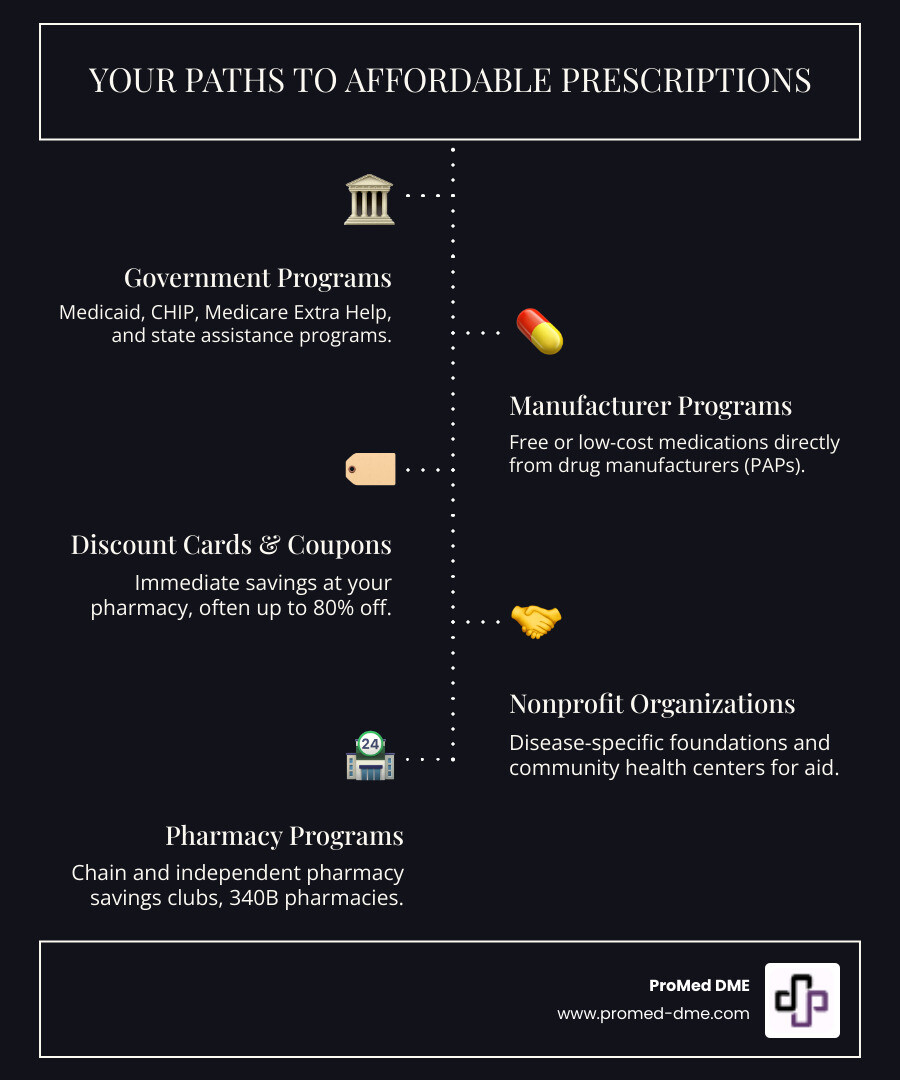
Millions of Americans wonder how to get help with prescriptions without insurance. If you're uninsured or underinsured, you have several proven paths to affordable medication:
- Government Programs - Medicaid, CHIP, Medicare Extra Help, and state assistance programs
- Patient Assistance Programs (PAPs) - Free or low-cost medications directly from drug manufacturers
- Discount Cards and Coupons - Immediate savings at your pharmacy, sometimes up to 80% off
- Nonprofit Organizations - Disease-specific foundations and community health centers
- Pharmacy Programs - Chain and independent pharmacy savings clubs, 340B pharmacies
The financial burden of prescriptions is significant without insurance. In the United States, the challenge is immense, with prices typically higher than in countries like Canada, where 2021 costs averaged $1,114 per person.
For those managing chronic conditions like diabetes or heart disease, these costs can force impossible choices between medication and necessities. The good news is that you have more options than you might think.
Whether you're facing a job loss, a coverage gap, or simply can't afford your prescriptions, numerous assistance programs exist to help. Many are free and offer guidance through the application process.
The key is knowing where to look and which programs fit your needs.
Understanding Your Options: How to Get Help with Prescriptions Without Insurance
Facing a prescription you can't afford without insurance is stressful. The high cost of medications, especially brand-name drugs, can be shocking. But you're not alone, and options are available. Your first line of defense is your healthcare team.

Your doctor and pharmacist are your strongest allies. Don't be embarrassed to tell them you can't afford your medication; it's a crucial conversation to have when figuring out how to get help with prescriptions without insurance.
Be honest with your doctor about your financial situation. They can often help by prescribing a generic version, which costs a fraction of the brand-name price. They may also provide free samples to get you started or suggest a therapeutic alternative—a different, less expensive drug that works just as well.
Your doctor's office staff or social workers may also know about local assistance programs. Don't hesitate to ask, "Are there any programs that could help me afford this?"
Your pharmacist is another great resource. They know which discount cards and savings programs offer real value and can sometimes find better pricing at other local pharmacies. A good relationship with your pharmacist gives you an expert in your corner.
The First Step: Generic vs. Brand-Name Medications
The single most effective way to slash prescription costs is to switch to generic medications. The price difference can be staggering, with generics often costing a fraction of their brand-name counterparts.
Brand-name drugs are the originals, developed after years of costly research and clinical trials, which is reflected in their high price.
Generics become available after the brand-name patent expires. They must contain the same active ingredients, dosage, and strength. The FDA requires rigorous testing to prove bioequivalence, meaning they work identically in the body.
Generics are cheaper not because they are inferior, but because their manufacturers don't have the massive research and development costs of the original drug.
Always ask your doctor, "Is there a generic version of this?" In most cases, a generic will work just as well and save you significant money. If not, your doctor will explain why the brand-name version is necessary.
What to Do if You Are Denied Assistance
If you're denied by a prescription assistance program, don't give up. A denial is disappointing, but it's not the end of your options.
First, ask why you were denied. The reason is often a simple fix, like missing paperwork or an income calculation error. Understanding the problem is the first step to solving it.
Next, review the eligibility requirements carefully. If the denial was due to missing paperwork, gather the necessary documents and resubmit your application.
Many programs have a formal appeals process. If you believe the denial was an error, file an appeal with supporting documentation and a clear explanation of why you qualify.
Thousands of assistance programs exist. If one doesn't work out, another might be a perfect fit, as they have varying eligibility criteria.
If you feel overwhelmed, reach out for help. Specialized organizations can review your application or suggest other programs. The Patient Advocate Foundation has excellent resources for the uninsured.
Even if formal programs don't work out, you can still explore discount cards, coupons, and pharmacy savings programs to reduce your costs, as we'll discuss next.
Tapping into Formal Assistance Programs
Formal assistance programs are a lifeline for those facing high medication costs without insurance. They are designed to ensure access to necessary medications. While applications can seem overwhelming, they generally just verify your income, residency, and medical need.
Before applying, gather your documents. You'll typically need proof of income (pay stubs, tax returns), proof of residency (utility bill), medical records or a doctor's certification, and identification. Also include proof that you lack adequate insurance. Organizing these documents in a folder will streamline applying to multiple programs.
How to get help with prescriptions without insurance through Government Programs
Government programs are the backbone of prescription assistance in the U.S., helping millions annually. You may qualify for more help than you realize.
Medicaid is a comprehensive federal and state program providing health coverage, including prescriptions, to low-income individuals and families. Eligibility has expanded, and income limits vary by state. If approved, your costs could drop dramatically. Find more information and see if you qualify for Medicaid assistance here.
The Children's Health Insurance Program (CHIP) covers children in families who earn too much for Medicaid but still need assistance. Every state has a CHIP program to ensure kids get necessary medications.
For seniors, Medicare Part D "Extra Help" is a federal subsidy that helps cover premiums, deductibles, and copays for prescription drug plans, substantially cutting out-of-pocket costs.
Many states offer State Pharmaceutical Assistance Programs (SPAPs) that target specific groups like seniors or those with chronic conditions. They may cover drugs other plans don't or help with copayments. Search for programs available in your state here.
The 340B Drug Discount Program allows certain health facilities (community health centers, some hospitals) to buy drugs at a deep discount and pass the savings to patients. If you receive care at a 340B facility, you can save significantly without proving income. Ask your clinic if they participate.
How to get help with prescriptions without insurance via Manufacturer & Non-Profit Aid
Beyond government aid, drug manufacturers and non-profits also offer significant assistance.
Patient Assistance Programs (PAPs) are offered by drug manufacturers and can be very generous, often providing brand-name medications for free or at a low cost for up to a year, with the option to reapply. To qualify, you generally must be a U.S. citizen or resident, meet income guidelines, and lack adequate insurance. To find a PAP, check the drug manufacturer's website under "patient assistance" or search online databases.
If you have a chronic condition, non-profit foundations focused on your disease (e.g., diabetes, cancer, heart disease) often provide direct financial aid or help you steer other assistance programs. They understand the specific challenges you face.
The Partnership for Prescription Assistance is a fantastic free resource that matches you with public and private programs based on your specific needs. They never charge for their services.
Applications for these programs require similar documentation as government aid (proof of income, residency, medical need, and insurance status). Keep copies and follow up on your application.
Finding how to get help with prescriptions without insurance through these programs takes effort, but the potential for free or low-cost medication makes it worthwhile. These programs exist to ensure no one has to choose between their health and financial stability.
Immediate Savings: Discount Cards, Coupons, and Pharmacy Strategies
When you need immediate savings at the pharmacy counter, prescription discount cards, coupons, and smart pharmacy strategies are lifesavers. These options are available to nearly everyone, regardless of income or insurance status.
How Prescription Discount Cards and Coupons Work
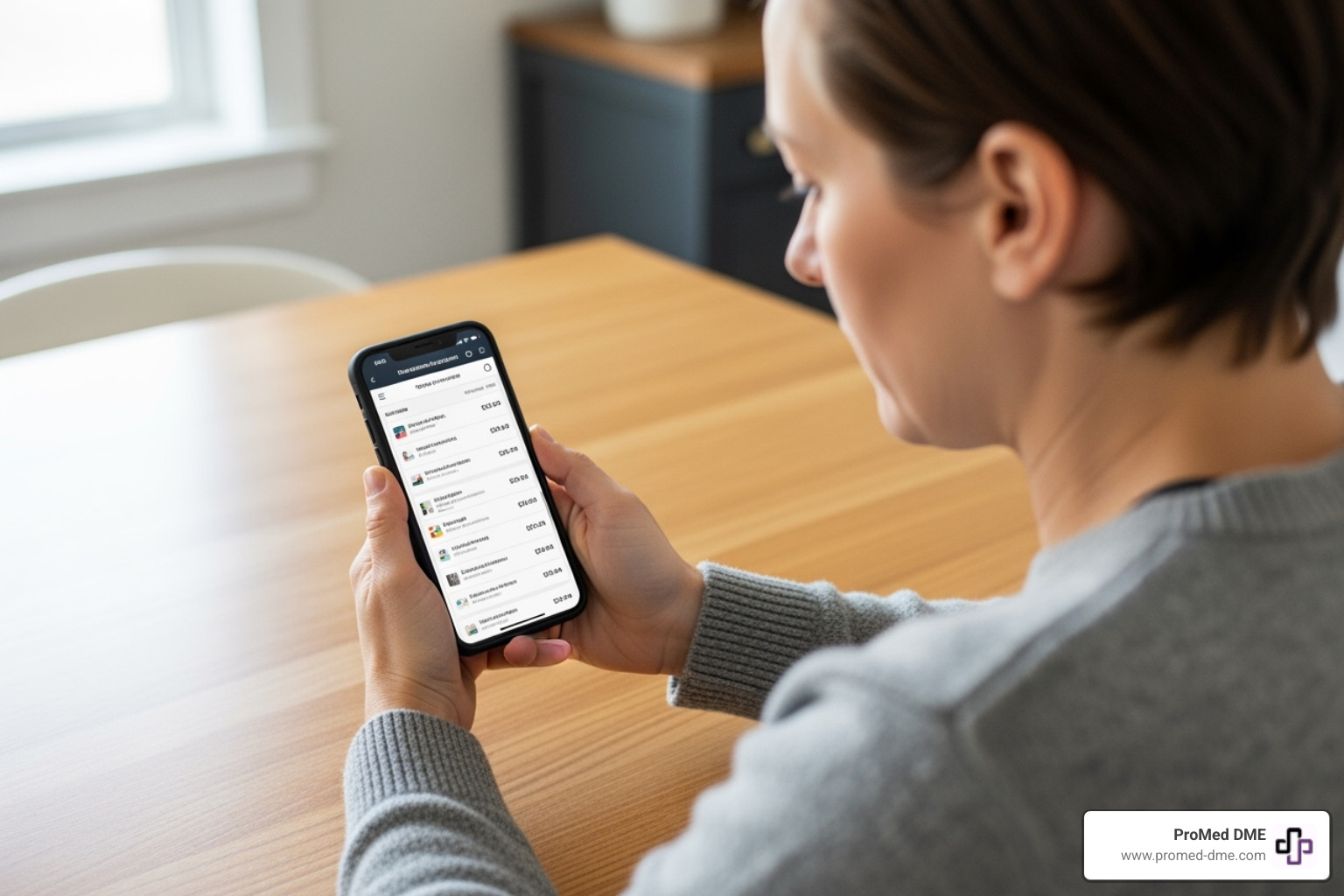
Prescription discount cards are a great tool for how to get help with prescriptions without insurance. These free cards work through Pharmacy Benefit Managers (PBMs) that negotiate lower prices with pharmacy networks. You simply present the card to pay the discounted price.
Savings can be substantial, often 10% to 80% off. Services like GoodRx and SingleCare allow you to compare prices at local pharmacies and get a coupon or card number to show the pharmacist. Coupon websites like USARX.com and Blinkhealth.com work similarly.
These programs are generally reliable, but prices can vary, so using a price comparison tool on your phone is smart. That payments made using a discount card typically don't apply to an insurance deductible. Also, ask your pharmacist about their pharmacy's loyalty programs or savings clubs.
For a comprehensive guide on all your options, WebMD has a helpful resource: How to Get Low-Cost or Free Prescriptions.
The Risks of "Too Good to Be True" Discounts
While saving money is important, be wary of "deals" that seem too good to be true, especially from dollar stores or unverified online pharmacies, as they can pose health risks.
Dollar store medications carry risks. A 2019 study found that 53% of foreign-made over-the-counter drugs at dollar stores had concerning components, often due to less strict quality control. Expired medications are another concern; an expired drug can be less effective or even harmful. Always check expiration dates carefully.
Be extra cautious with supplements from dollar stores, as they are not as rigorously regulated by the FDA. Look for quality seals like USP or NSF, which indicate independent testing.
Unregulated online pharmacies are also dangerous. Avoid sites that don't require a prescription, offer impossibly low prices, or ship from unknown locations. They may sell counterfeit drugs containing incorrect or harmful ingredients.
Your health is worth more than a few dollars saved. Stick with reputable pharmacies.
Here's how discount cards compare to Patient Assistance Programs:
Prescription Discount Cards: Give you immediate savings at the pharmacy. They're available to anyone and require almost no paperwork. However, you'll still pay a portion of the cost, and the savings don't count toward insurance deductibles. Best for immediate needs.
Patient Assistance Programs (PAPs): Can provide brand-name medications for free or nearly free. The process takes time and requires an application with proof of income, but it can save you thousands on long-term, expensive drugs.
The right choice depends on your situation. Use a discount card for immediate help and apply for a PAP for long-term savings on costly drugs.
Special Circumstances and International Perspectives
Life is unpredictable. You might need medication help after a job loss, during a natural disaster, or in other unique circumstances. Let's explore options for when the unexpected happens.
Finding Emergency Prescription Assistance
If you suddenly lose your job and health insurance, your first call should be to your doctor. They can often provide samples to bridge the gap or connect you with a social worker. Community health centers and local non-profits may also have emergency funds.
During federally declared disasters like hurricanes or floods, the Emergency Prescription Assistance Program (EPAP) can be activated. This lifeline provides free 30-day supplies of medications and some medical equipment to uninsured individuals in affected ZIP codes. You can check if EPAP is active in your area at Emergency Prescription Assistance | Free Medicine for Uninsured.
Many state and local governments also offer emergency aid. For example, Alberta, Canada's MyAlberta Emergency Benefits provides quick financial help for medications in emergencies. Check your state and local government websites for similar programs.
The key with emergency assistance is acting quickly and not waiting until you've completely run out of medication.
A Tale of Two Systems: Prescription Coverage in the US vs. Canada
Understanding how to get help with prescriptions without insurance involves looking at different systems, like the contrast between the U.S. and Canada.
The U.S. has a patchwork healthcare system of public programs (Medicare, Medicaid) and private insurance. Those who fall through the gaps face high cash prices for medication, which is why the assistance programs we've discussed are so vital.
Canada has universal healthcare, but prescription drugs outside of hospitals are not always covered. Coverage often depends on provincial plans or private insurance, leaving about one million Canadians without drug coverage. Each province manages drug coverage differently, and while most Canadians have some coverage, gaps still exist.
To bridge these gaps, Canada has programs like the free innoviCares card, which helps cover costs for certain brand-name drugs. You can see an example of what's covered in this PDF of what's covered in Canada.
The bottom line is that both the U.S. and Canada face the challenge of prescription affordability. While the systems are different, both have programs in place to help people manage costs. What matters is knowing how to steer the system you're in.
Frequently Asked Questions about Prescription Assistance
Navigating how to get help with prescriptions without insurance can be overwhelming. Here are clear answers to some common questions.
What should I do first if I can't afford my medication?
First and most importantly, do not stop taking your medication, as this can be dangerous. Instead, talk to your doctor immediately about your financial situation. They can often switch you to a cheaper generic, provide free samples, or connect you with a social worker. Your pharmacist is also a great resource for finding discounts and coupons. Acting quickly and communicating with your healthcare team is key.
Are there specific prescription assistance programs for chronic conditions like diabetes?
Yes, many non-profits and pharmaceutical companies have programs for chronic conditions like diabetes, cancer, or heart disease. These programs offer financial aid, copay assistance, or guidance with applications for Patient Assistance Programs (PAPs). Because they are custom to specific diseases, they understand your unique needs and challenges. Search for foundations dedicated to your condition for targeted support.
How much can I really save with these programs?
Savings can be remarkable but vary by program and medication.
- Discount cards can save you 10% to 80% off the cash price.
- Patient Assistance Programs (PAPs) can provide expensive brand-name drugs for free or a small copay.
- Government programs like Medicaid or Medicare's "Extra Help" can cover most or all of your costs if you qualify.
The potential savings are worth the effort, and people often save thousands annually. Don't get discouraged if one option doesn't work; keep exploring until you find a solution.
Conclusion
You now know that finding how to get help with prescriptions without insurance is a challenge with real solutions. No one should have to choose between medication and groceries. The key takeaway is that you have options and support.
Start by talking to your doctor and pharmacist. Then, explore the avenues we've discussed: government programs, patient assistance programs (PAPs), discount cards, and non-profit organizations. Each offers a path to affordable medication.
While applications can be overwhelming and you might face denials, persistence is key. The savings can be life-changing, allowing you to take your medication as prescribed and effectively manage your health.
At ProMed DME, we know healthcare costs go beyond prescriptions. We provide top-quality durable medical supplies, including diabetes, urology, wound care, and bracing products. Our on-staff nurse is available to answer questions, and we work with most insurance plans to minimize your out-of-pocket costs for medical supplies.
Your health matters. Don't let cost be a barrier to the care you deserve. Take a proactive step today by calling your doctor, applying for assistance, or downloading a discount card. Each action is a step toward controlling your health and future.
Explore our range of medical supplies to see how we can support your health needs today.
Related Resources & Articles
Stay informed with our informative blog posts.

Discover the ProMed Advantage
& Try Our Products
We offer free shipping and legendary customer service to ensure you receive the
best DME products for your needs.