
The Ultimate Rx Savings Finder: Uncovering Affordable Medications
Why Prescription Costs Are a Growing Concern for Americans
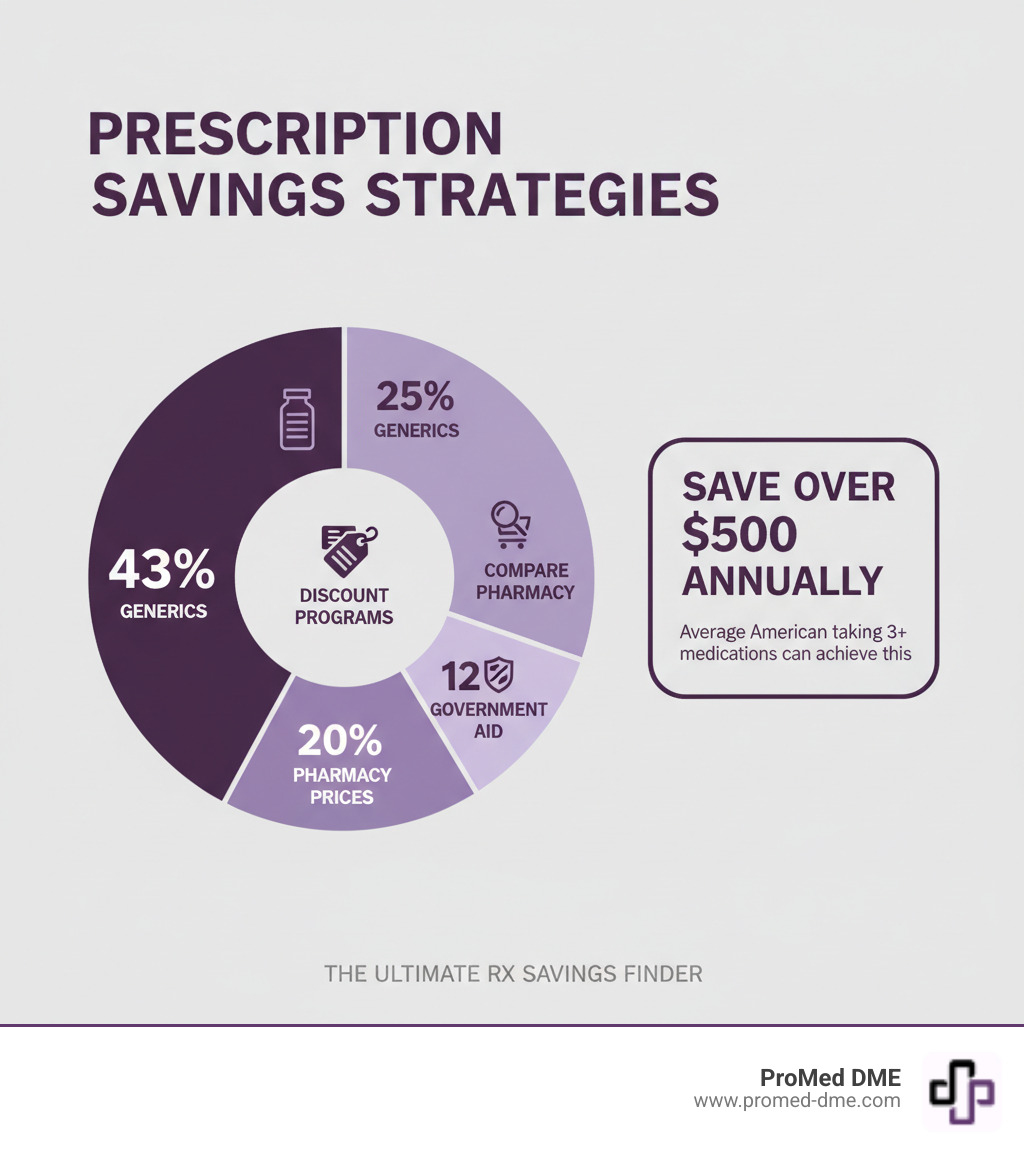
How to get cheap prescriptions is a question millions of Americans face. For those managing chronic conditions, the financial burden can be overwhelming, especially when the average copay for brand-name drugs is $55.82, while generics average just $6.61. Fortunately, you have more options than you might think. If you're looking for immediate relief, here are the most effective strategies:
- Ask for generic medications - They cost 30-80% less than brand names and contain the same active ingredients.
- Use prescription discount cards - Programs like GoodRx or SingleCare can save up to 80% off cash prices.
- Compare prices across pharmacies - The same medication can vary significantly in price between stores.
- Apply for government assistance - Medicare Extra Help can reduce costs to as little as $4.90 for generics.
- Try online pharmacies - Services like Mark Cuban Cost Plus Drug Company or Amazon Pharmacy offer transparent, lower pricing.
- Order 90-day supplies - Buying in bulk reduces dispensing fees and per-day costs.
- Check manufacturer assistance programs - Many pharmaceutical companies offer patient assistance for those who qualify.
This guide will walk you through these proven strategies to reduce your prescription costs without compromising your health.
Understanding Your Options: Prescription Discount Programs vs. Insurance
To figure out how to get cheap prescriptions, you must understand the difference between your options. It's one of the most powerful tools for saving money on medications. Let's break down how to use each option to your advantage.
What is the Difference Between a Prescription Discount Card and Insurance?
Prescription insurance, often part of your health plan or Medicare Part D, involves using network pharmacies. You pay a copay (a flat fee) or meet a deductible, and your insurance company pays the rest of the medication's cost.
Prescription discount cards are not insurance. They are free programs that give you access to pre-negotiated cash prices at participating pharmacies. Your insurance company is not involved. Programs like Optum Perks let you search for your medication and find coupons for nearby pharmacies.
Here's the key: you can't use insurance and a discount card at the same time, but you can choose which one to use for each prescription. The smart move is to always ask your pharmacist to check both prices. The discount card price is often cheaper, especially if you have a high deductible, the drug isn't covered by your plan, or for some generics.
Types of Prescription Savings Programs
Beyond insurance and discount cards, a network of assistance programs can make a tremendous difference in your budget.
Prescription discount cards: The most accessible option, free and available to anyone with no income requirements. They are valuable if you're uninsured, have a high deductible, or your insurance doesn't cover a specific drug. Savings can be up to 80% off the cash price.
Manufacturer patient assistance programs: Offered directly by pharmaceutical companies for brand-name drugs. Based on income and insurance status, these programs may provide medication for free or at a reduced cost. The savings can be thousands of dollars per year.
State pharmaceutical assistance programs (SPAPs): State-funded programs that help residents who meet criteria for income, age, or medical conditions. Benefits vary widely by state.
Non-profit programs: Charitable organizations that provide direct financial aid or help you steer other assistance programs.
The Medicine Assistance Tool is a free database that helps you search hundreds of public and private programs. By entering your medication and basic information, it shows you which programs you might qualify for. The key to saving is to mix and match these approaches to find the lowest price for each medication you need.
How to Get Cheap Prescriptions: Practical Strategies for Big Savings
Let's explore the practical, everyday strategies you can use to significantly reduce your medication expenses. These are straightforward approaches anyone can use to take control of their prescription costs.

Accept Generic Medications to Slash Costs
If you take away just one thing about how to get cheap prescriptions, it's this: always ask for generics. This single choice can cut your medication costs by 30% to 80%. Generics contain the same active ingredients, dosage, and strength as their brand-name counterparts and are held to the same rigorous FDA standards for quality and safety. The only real differences are the appearance and the price. While the average copay for a brand-name drug is $55.82, generics average just $6.61. When your doctor writes a prescription, simply ask if a generic version is available.
Leverage Online & Mail-Order Pharmacies
Online and mail-order pharmacies have lower overhead costs than traditional stores, and they often pass those savings to you.
One groundbreaking service is the Mark Cuban Cost Plus Drug Company. Their transparent model shows the manufacturer's cost, adds a fixed 15% markup, and includes a small pharmacy fee. The savings can be dramatic; for example, the cancer drug Imatinib, which retails for over $9,600, is available for just $34.50. You can read more in this WSJ article on new pharmacy models.
Amazon Pharmacy offers convenient home delivery, and its RxPass subscription gives Prime members access to eligible medications for a flat $5 per month. They provide transparent pricing and protect your data according to their Notice of Privacy Practices. Mail-order services like Optum Rx® are also great for maintenance medications, often shipping nationwide with competitive pricing.
Smart Shopping: Compare Prices and Use Coupons
The same medication can have dramatically different prices at pharmacies just down the street from each other. This is why comparison shopping is essential. Instead of calling around, use online tools to do the work for you. WebMDRx lets you compare prices at over 35,000 pharmacies and print free coupons for savings up to 80%. Pharmacy-specific tools like the Walgreens Rx Savings Finder can also open up significant discounts. Taking five minutes to compare prices before filling a prescription can save you hundreds of dollars a year. Don't hesitate to ask your pharmacist which discount option gives you the best price.
Tapping into Government and State-Specific Assistance
Many people don't realize that federal and state governments offer substantial help with medication expenses. These programs exist for people facing financial challenges and can make a real difference in your monthly budget.

Federal Programs for Prescription Assistance
If you're on Medicare, you need to know about "Extra Help." This federal program, also known as the Low-Income Subsidy, helps people with limited income pay for Medicare Part D coverage, including premiums, deductibles, and copayments. The savings can be life-changing: your premiums and deductibles could drop to $0, and prescription costs could be as low as $4.90 for generics in 2025.
Many people who receive Medicaid, Medicare Savings Programs, or SSI are automatically enrolled. Others can apply for Extra Help online. This is one of the most powerful ways how to get cheap prescriptions through government aid. Visit the official Medicare Extra Help page to learn more about eligibility.
Finding Help in Your State
Your state might offer additional assistance through State Pharmaceutical Assistance Programs (SPAPs). Benefits vary, so it's important to see what's available where you live. Medicare provides a helpful SPAP search tool to find programs in your state.
For example, Michigan's MiRx Card can save eligible residents about 20% on common medications. In Washington, the ArrayRx Card is free for all residents, with no income restrictions, and can be used if you're uninsured or have a high deductible.
If navigating these programs feels overwhelming, your local State Health Insurance Assistance Program (SHIP) offers free, personalized counseling to guide you through your options and applications. Don't leave this money on the table.
Proactive Steps: Your Role in Lowering Prescription Costs
Some of the most effective strategies for finding how to get cheap prescriptions involve direct communication with your healthcare providers. Being proactive can open up significant savings.

How to get cheap prescriptions by talking to your doctor and pharmacist
Your healthcare team is your best ally in managing medication costs. Don't be shy about bringing up cost concerns. Here are some topics to discuss:
- Request generics: Always ask if a generic version is available and appropriate for your condition.
- Ask for a 90-day supply: Buying in bulk for maintenance medications can reduce per-pill costs and dispensing fees. Many insurance plans offer lower copays for longer supplies.
- Discuss pill splitting: For certain medications, your doctor might prescribe a higher dose that can be safely split, giving you two doses for the price of one. Never split pills without your doctor's explicit approval and a proper pill-splitter.
- Inquire about therapeutic alternatives: If a generic isn't available, ask if a different, less expensive medication in the same class would work for you.
- Schedule a medication review: A comprehensive review with your doctor or pharmacist can identify unneeded medications, duplicate therapies, or opportunities to simplify your regimen. For more guidance, see these Tips for talking to your provider.
How to get cheap prescriptions safely and avoid scams
Prioritizing safety is paramount when seeking affordable medications. The wrong choice could put your health at risk.
When using legitimate online pharmacies, ensure they require a valid prescription, employ U.S.-licensed pharmacists, and protect your health data, as detailed in policies like Amazon Pharmacy's Notice of Privacy Practices. A pharmacy that doesn't require a prescription is a major red flag.
Be extremely cautious with over-the-counter medications from dollar stores. These products may not be FDA-approved, could be expired, or might contain harmful components. The small savings are not worth the risk to your health. If you must buy from such stores, check for U.S. manufacturing, stick to familiar brands, and scrutinize expiration dates. If a deal seems too good to be true, it probably is.
Frequently Asked Questions about Finding Affordable Prescriptions
Here are clear, honest answers to the most common questions about controlling your medication expenses.
Can I use a prescription discount card if I have insurance?
Yes, but you can't use both for the same purchase. You must choose one. At the pharmacy, ask the pharmacist to compare the price using your insurance copay versus the price using a discount card. Then, you can choose whichever is cheaper.
This strategy is especially useful if you have a high-deductible plan, if your insurance doesn't cover a specific drug, or if the discount card price for a generic is simply lower than your copay. Always ask to compare.
How much can I realistically save on my prescriptions?
Savings vary, but the potential is substantial, often up to 80% off the cash price. For some specialty drugs, the savings can be thousands of dollars, as seen with innovative pharmacies that drastically cut prices on expensive medications like Imatinib.
For everyday drugs, the savings are also impressive. Choosing generics can cut costs by 30-80%, with average copays dropping from over $55 for brand-names to under $7 for generics. By combining strategies like using discount cards, comparing prices, and applying for assistance, you can realistically save hundreds or even thousands of dollars per year.
Are generic drugs really as good as brand-name drugs?
Yes, with complete confidence. Generic medications are required by the FDA to have the same active ingredients, dosage, strength, and quality as their brand-name counterparts. They must pass the same rigorous tests for safety and effectiveness.
The only differences are in inactive ingredients (like fillers or dyes), appearance, and price. Generics are cheaper because their manufacturers don't have to repeat the expensive research and marketing of the original drug. When your doctor suggests a generic, you can be sure you're getting the same quality medication for a much lower price. It's one of the simplest and most reliable ways how to get cheap prescriptions.
Conclusion: Taking Control of Your Healthcare Costs
You now have a toolkit of strategies for understanding how to get cheap prescriptions. It's about making informed choices, one step at a time. By embracing generics, using discount cards, comparing prices, and exploring assistance programs, you can take charge of your healthcare journey and refuse to let costs dictate your quality of life.
Asking questions is your right. Ask your pharmacist to compare your copay with a discount card price. Ask your doctor about generics or 90-day supplies. These simple conversations can make a real difference.
At ProMed DME, we share your commitment to affordable, quality healthcare. Just as you seek to reduce prescription costs, we're dedicated to making durable medical supplies accessible. Whether you need urology products, diabetes supplies, wound care, or bracing, we are here to help. Based in Stuart, Florida, we ship across the United States with free shipping on all orders. We have a dedicated nurse on staff to answer your questions and work with most insurance plans to keep your out-of-pocket expenses low.
We believe healthcare should be about healing, not financial stress. You've learned how to get cheap prescriptions; now apply that same proactive approach to your medical supply needs. Learn more about our services and find how ProMed DME can support your health journey with the care and affordability you deserve.
Related Resources & Articles
Stay informed with our informative blog posts.


Discover the ProMed Advantage
& Try Our Products
We offer free shipping and legendary customer service to ensure you receive the
best DME products for your needs.